Written by Healing Sky Editorial Team. Clinically reviewed by Raul Rodriguez M.D.
Most people who try meditation quit because no one told them the mind is supposed to wander. Focused attention meditation, often called focused meditation or concentration practice, is built around that fact. You choose a single anchor for your attention, notice when your mind has drifted, and return. That cycle is the entire practice. You do not need special equipment, spiritual beliefs, or an hour of spare time. With consistent practice, focused attention can strengthen the mental capacity that helps you stay present, think more clearly under stress, and choose your responses rather than reacting on autopilot.
What Focused Attention Meditation Is
Focused attention meditation (FA) places your attention on a single anchor, most often the breath, and returns to it whenever distraction arises. The practice has three repeating moves: choose your anchor, notice when attention drifts, and gently redirect back. You are not failing when your mind wanders; you are building skill each time you recognize it and return.
FA is not about emptying the mind. Thoughts, noises, feelings, and urges still arise. The goal is to relate to them with steadiness: notice, label them briefly (thinking, hearing, worrying), and refocus on your anchor. Over time, this refocusing becomes more natural, and everyday concentration may improve.
Why Focused Attention Matters for Mental Health
Stress narrows attention around worries or sends it jumping between tasks, fueling anxiety, irritability, and fatigue. Focused attention meditation trains the quality of attention you bring to therapy, schoolwork, parenting, and relationships. It may calm the body's stress response and reduce the rumination loops that keep anxiety and low mood going. It can also improve working memory and task focus, and support emotional regulation so there is space to pause before acting.
How the Practice Works in the Brain and Body
When you focus on one anchor, you engage brain networks for sustained attention and self-regulation. Redirecting attention from a distraction back to the anchor may strengthen the top-down circuits that help you notice impulses and choose what to do next. Meanwhile, slow, steady breathing can nudge the nervous system toward a rest-and-digest state.
Immediate effects may include steadier breathing, a lower heart rate, and a subtle sense of settling. After brief daily sessions, some people notice better concentration, less reactivity, and improved sleep quality within a few weeks. With regular practice over months, attention networks may become more efficient and the mind's tendency to wander may quiet, which many people experience as fewer intrusive thoughts. The benefits accumulate much like physical training: small sets, repeated consistently.
Focused Attention vs. Other Mindfulness Styles
Mindfulness is an umbrella term, and focused attention is one style within it. Knowing the differences helps in choosing the right tool for a given goal.
- Focused attention: pick a single anchor (breath, sound, word) and keep returning to it; often best for building concentration and steadying the mind.
- Open monitoring (choiceless awareness): notice whatever arises without choosing an anchor; may be useful once attention is more stable.
- Loving-kindness or compassion practice: repeat phrases of goodwill; helpful for softening self-criticism and strengthening connection.
Many people start with focused attention to establish stability, then add other methods as needed.
Who Benefits and When to Be Cautious
Most people can practice focused attention safely. It is particularly helpful for busy professionals, students, caregivers, and anyone with a racing mind. People with anxiety, depression, or attention challenges may notice better focus and fewer worry spirals after several weeks of steady practice.
Some conditions call for extra care. Meditation is not a substitute for treatment when symptoms are acute, and for some people certain anchors can be activating. If any practice increases distress, modify it or pause. Specific guidance by situation:
- If you have trauma or panic, internal breath focus may feel intense; try eyes-open practice with an external anchor such as a spot on the wall or ambient sounds.
- If you have bipolar disorder, avoid sleep deprivation and consult your clinician before deep retreats or long sessions.
- If you have psychosis or severe dissociation, practice only with professional guidance.
- If you feel numb, overwhelmed, or destabilized during practice, shorten sessions, open your eyes, and shift to grounding through touch or movement.
- Seek support urgently if suicidal thoughts increase; focused attention is an adjunct to, not a replacement for, comprehensive care.
A 10-Minute Beginner Guide
Aim for consistency over intensity. Five to ten minutes most days is a strong foundation.
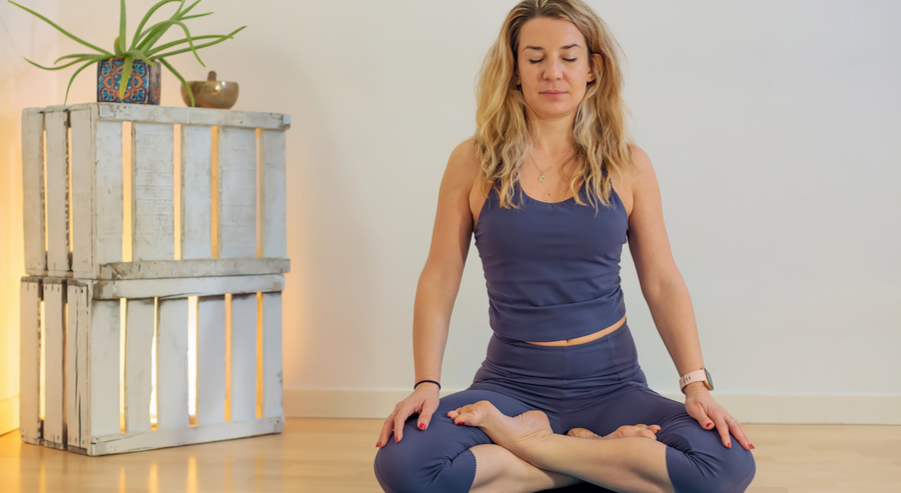
- Find a quiet, safe space. Sit upright on a chair or cushion; keep your feet or seat grounded and your spine long but not rigid.
- Set a timer for 5 to 10 minutes so you do not clock-watch.
- Choose your anchor. The natural breath is standard; the sensation at the nostrils or the rise and fall of the chest both work well.
- Soften your gaze or close your eyes. Take one slower exhale, then let the breath return to its natural rhythm.
- Place attention on the anchor. Feel each in-breath and out-breath as a wave of sensation.
- When you notice distraction, thoughts, sounds, emotions, quietly label it ("thinking," "hearing," "feeling"), then return to the next breath.
- When the timer rings, open your eyes, notice how you feel, and close the session.
If breath focus is uncomfortable, switch to a neutral external anchor such as a sound or a visual point and keep the same steps.
Choosing Your Anchor
An anchor is a steady place to rest attention. Different anchors suit different nervous systems and settings, and it is worth knowing the options before settling on one.
The breath, sensations at the nostrils or the rise and fall of the chest, is simple and always available, which is why it is the most common starting point. Counting ("in-1, out-1 … in-10, out-10," then begin again) adds a light task that prevents subtle drifting. Sound works well when breath focus triggers anxiety; a fan, white noise, or the ambient hum of a room all serve as stable anchors. A visual point such as a small dot on the wall, a candle flame, or a neutral object keeps the practice eyes-open. Touch, fingertips on a mug, one hand on the belly, or the feeling of feet in shoes, is grounding when emotions run high.
If an anchor ramps up tension, it is the wrong tool for the moment. Change the anchor, shorten the session, and keep the tone kind.
Common Obstacles and Simple Fixes
Trouble concentrating is not a sign of failure at meditation, it is the reason to practice. A racing mind responds well to shorter sessions of 3 to 5 minutes with gentle counting on exhales to give the mind a task. Restlessness can be addressed by anchoring in the soles of the feet, or by pairing stillness with a slow breath and a tiny shoulder roll every few minutes. Sleepiness calls for eyes slightly open, a taller posture, and practicing earlier in the day in a cooler room.
Intrusive thoughts are best handled by labeling them neutrally ("thinking"), avoiding engagement with the content, and returning to the anchor as many times as needed. Physical discomfort is a signal to adjust posture, add a cushion, or practice lying down if pain is significant, shifting focus to touch rather than breath. Impatience or self-criticism tends to ease when the timer is set modestly and each session ends by noting one thing that went well.
The underlying fix is almost always the same: make it smaller, make it simpler, and meet the difficulty with steadiness.
Building a Habit and Bringing It into Daily Life
Focused attention works best when it fits an existing schedule. Tying it to a current habit and tracking it lightly builds consistency without performance pressure. Starting with 2 to 5 minutes daily is more effective than 30 minutes once a week. Choosing the same window each day, right after waking, during a lunch break, or before bed, reduces the friction of deciding when to practice. Habit stacking works well here: "After I brush my teeth, I sit and breathe for three minutes." A simple checkmark on a calendar is enough tracking. Silencing notifications for the practice window, using Do Not Disturb as a ritual signal, reinforces the boundary.
Away from formal sessions, the same skill applies in small doses. Taking five slow breaths before a meeting, before answering a difficult message, or before stepping into the house after work extends the training into daily moments. Practicing one-task attention, washing a dish or writing an email with full attention for one minute, brings the practice off the cushion and into the situations where it matters most.
Working with Therapy, Medication, and Specific Conditions
Focused attention pairs well with therapy and, when prescribed, medication. It strengthens the attentional control that makes cognitive-behavioral skills easier to apply in real time. For people taking stimulants for ADHD or SSRIs for anxiety or depression, meditation may enhance benefits by improving moment-to-moment self-regulation.
Adapting the practice to a specific diagnosis makes a real difference. People with ADHD tend to do better with external anchors, shorter sits of 3 to 7 minutes, and brief movement breaks; a visual timer and counting can reduce drift. For anxiety and panic, emphasizing longer, slower exhales helps, and eyes-open practice with a visual point or touch anchor is preferable if breath focus spikes anxiety. For trauma, sessions should stay brief, external anchors should be prioritized, and practice is best done alongside a clinician who understands trauma-sensitive mindfulness. If there is uncertainty about how to adapt practice to a particular diagnosis or medication regimen, a clinician can offer personalized guidance.
Frequently Asked Questions
Is focused attention the same as mindfulness? Focused attention is one form of mindfulness that trains concentration by returning to a single anchor. Many people start here because it is clear and structured.
How long until benefits appear? Some people notice small shifts, slightly calmer, a bit clearer, within 2 to 4 weeks of daily 5 to 10 minute sessions. Larger changes build over months, not days.
Do I need to sit cross-legged? No. Any stable, alert posture works: chair, sofa edge, or cushion. Comfort supports consistency.
Eyes open or closed? Choose what keeps you most steady. If sleepiness is a problem, open the eyes slightly; if distraction is the issue, try them closed.
What counts as progress? Getting lost less often is one sign, but a better measure is how quickly and kindly you return, and how that steadiness shows up outside of practice.
Getting Started
Focused attention is learnable and does not require much time to begin. Pick an anchor, notice when you have drifted, and return, again and again, with kindness. If you are navigating anxiety, depression, ADHD, or trauma and want to tailor the practice to your situation, Healing Sky can connect you with a provider who offers guidance on meditation and mindfulness as part of a broader care plan.