Written by Healing Sky Editorial Team. Clinically reviewed by Eric Spinner PsyD on April 30, 2026
Memory lapses, personality shifts, or a loved one getting lost on a familiar route can be frightening to witness and hard to name. Understanding the different types of dementia helps families know what to expect, guides clinicians toward the right treatment, and gives patients more time to plan while they are still able to participate in those decisions.
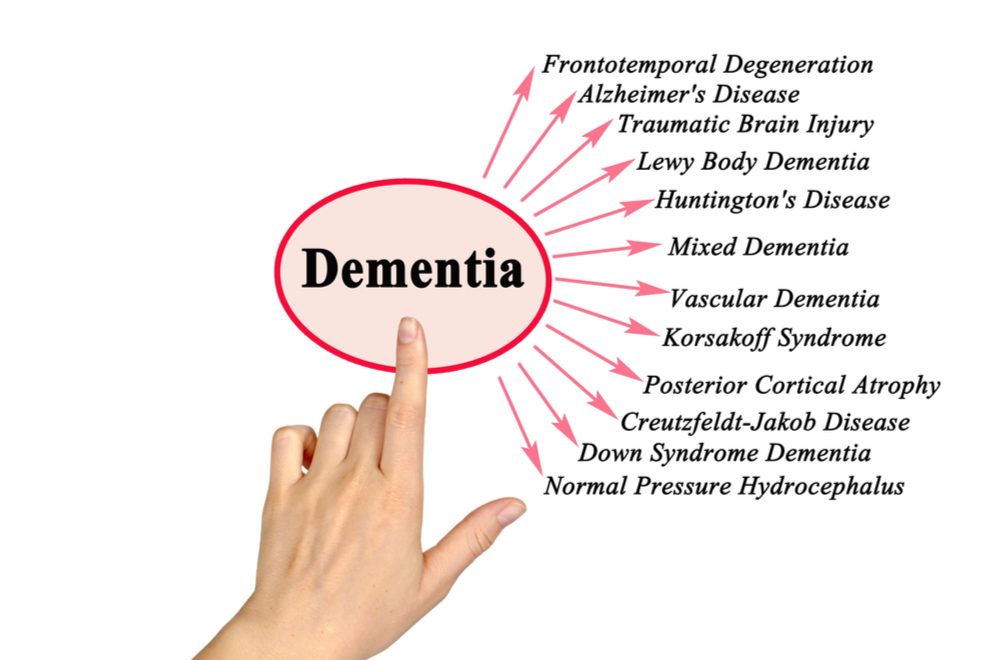
Dementia is not a single disease but a collection of brain disorders that cause progressive decline in memory, thinking, behavior, and the ability to manage daily life. What sets dementia apart from normal aging is that it creates interference significant enough to disrupt work, relationships, finances, medication management, driving, and eventually basic self-care. Normal aging may bring slower recall, but it does not derail independent functioning. Mild Cognitive Impairment sits between the two: a noticeable decline in memory or thinking that exceeds normal aging, yet leaves independent function largely intact.
One condition that is sometimes confused with dementia deserves special mention: delirium. Delirium is sudden confusion lasting hours to days, caused by infection, medication side effects, dehydration, or hospitalization. It requires urgent medical treatment, and delayed diagnosis can be dangerous. Depression and anxiety can also mimic dementia through concentration problems, but they require different treatment and should be carefully distinguished during evaluation.
Dementia in Plain Language
The brain operates through multiple interconnected pathways, and different types of dementia disrupt those circuits in distinct ways. That is why first symptoms vary so much from person to person: one individual may lose the ability to store new memories, another may struggle to find words, and a third may show changes in judgment or social behavior long before memory is affected.
The pattern of symptoms, their order of appearance, and the rate at which they progress all carry diagnostic weight. Families are often the first to notice something has changed, and their observations are essential to the evaluation process.
Core Symptoms to Watch For
The following symptoms appear across the major dementia types, though which ones appear first and how prominently they feature depends on the specific diagnosis.
Memory problems include asking the same questions repeatedly, failing to recall recent conversations, and getting lost in familiar places.
Language difficulties include delayed word retrieval, simplified speech, and trouble following complex instructions.
Executive function problems cause people to struggle with planning meals, paying bills, tracking medications, and managing time.
Spatial perception deficits affect distance judgment while driving, the ability to follow maps, and assembling objects.
Mood and behavioral symptoms include apathy, irritability, disinhibition, reduced empathy, and new compulsive or ritualistic behaviors.
Perceptual symptoms include visual hallucinations, fixed false beliefs, and loss of the ability to recognize familiar people or places.
Motor symptoms include tremors, stiffness, shuffling gait, and increased fall risk.
Sleep disturbances include excessive daytime sleepiness, acting out dreams during sleep, and a reversed day-night pattern.
The Major Types of Dementia
Each dementia has a characteristic fingerprint. Knowing the hallmark features helps families anticipate needs and helps clinicians target care.
Alzheimer's Disease
Alzheimer's disease is the most common cause of dementia. It typically begins by impairing the ability to store new information, which is why repeated storytelling, misplaced items, and forgotten appointments are often the earliest signs. Word-finding difficulties follow, making conversation disjointed. Spatial awareness problems emerge next, causing people to become lost or misjudge distances. As the disease progresses, patients lose insight into their condition, self-care becomes difficult, and behavioral symptoms including delusions may develop.
The course is gradual, advancing at different rates, with periods of relative stability punctuated by decline. The full progression from first symptoms to advanced stages typically spans multiple years.
Cognitive testing reveals deficits in recent memory and new learning. Brain imaging may show hippocampal atrophy. Specialized centers use cerebrospinal fluid tests, amyloid or tau PET scans, and blood-based biomarkers to confirm early or atypical cases.
Cholinesterase inhibitors combined with memantine provide symptom relief for many patients. Non-drug approaches, including structured routines, purposeful activities, and trained caregiver support, are equally important. Specialist assessment is needed to weigh the benefits and risks of disease-modifying treatments in early-stage disease.
Vascular Dementia
Vascular dementia results from reduced blood flow to brain tissue caused by strokes, small vessel disease, or a combination of both. It frequently coexists with Alzheimer's disease. Unlike Alzheimer's, the earliest problems tend to involve attention, processing speed, and executive function rather than memory. Gait slowing, balance problems, and urinary urgency can appear earlier than in Alzheimer's. Mood symptoms, particularly depression, apathy, and emotional lability, are common. Decline may appear stepwise following strokes or silent infarcts rather than as a smooth progression.
Risk factors include high blood pressure, diabetes, high cholesterol, smoking, atrial fibrillation, and sleep apnea. Brain MRI showing strokes, microbleeds, or extensive white matter changes, along with a history of stroke or transient ischemic attacks, supports the diagnosis.
Treatment centers on aggressive vascular risk management: blood pressure, glucose, lipids, exercise, sleep apnea treatment, and smoking cessation. Physical and occupational therapy support mobility and safety. Cholinesterase inhibitors and cognitive rehabilitation may help selected patients, particularly in mixed cases.
Dementia with Lewy Bodies
Dementia with Lewy bodies (DLB) is caused by abnormal alpha-synuclein protein deposits in the brain and is closely related to Parkinson's disease. It affects attention, alertness, movement, and visual processing. Four features are particularly characteristic:
- Fluctuating cognition: periods of clear thinking that alternate with sudden confusion or drowsiness
- Recurrent, well-formed visual hallucinations, often of people or animals, appearing early in the illness
- Parkinsonian features: stiffness, slowness, reduced facial expression, soft voice, and shuffling gait
- REM sleep behavior disorder: acting out dreams, yelling, or striking out during sleep
A critical safety point: people with DLB have severe hypersensitivity to antipsychotic medications, which can cause life-threatening reactions.
The "one-year rule" helps distinguish DLB from Parkinson's disease dementia: if cognitive symptoms and parkinsonism begin together or within about a year of each other, DLB is the more likely diagnosis. Neuropsychological testing typically shows visuospatial and attention deficits with relatively preserved memory in the early stages.
Cholinesterase inhibitors may improve both cognition and hallucinations. Parkinson's medications can help movement symptoms but risk worsening hallucinations, requiring careful balancing. If antipsychotics become absolutely necessary, they must be used with extreme caution under specialist oversight.
Parkinson's Disease Dementia
Parkinson's disease dementia (PDD) shares many features with DLB but develops after years of established Parkinson's motor symptoms, with cognitive decline following motor onset by more than a year. Attention and executive problems, visual hallucinations, and slowed thinking are the predominant cognitive features. Management follows similar principles to DLB, with close coordination between neurology and psychiatry to balance movement and mental health treatment.
Frontotemporal Dementia
Frontotemporal dementia (FTD) affects the frontal and temporal lobes, which govern personality, social behavior, language, and executive function. It is a leading cause of early-onset dementia, often presenting between ages 45 and 65.
The behavioral variant presents with personality change, either apathy or disinhibition, meaning socially inappropriate speech or actions. Loss of empathy, poor judgment, compulsive behaviors, and changes in eating habits, particularly cravings for sweets, are common. Memory and visuospatial skills are relatively preserved early on. Non-drug behavioral strategies are first-line treatment. SSRIs may help with irritability, compulsions, or overeating. Cholinesterase inhibitors generally do not help and may worsen agitation in some cases.
Primary progressive aphasia (PPA) is a language-predominant variant of FTD with three subtypes. The nonfluent/agrammatic subtype involves effortful speech and grammatical errors, with single-word comprehension often preserved. The semantic variant involves fluent speech with loss of word meaning and difficulty recognizing objects or familiar faces. The logopenic variant involves word-finding pauses and repetition problems; the underlying pathology in logopenic PPA is often Alzheimer's disease. Speech-language therapy is central to treatment across all PPA subtypes, with tailored communication strategies helping maintain connection.
Some FTD cases are inherited. Genetic counseling is worth considering when there is early onset or a strong family history.
Mixed Dementia
Many older adults have more than one pathological process occurring simultaneously, most commonly Alzheimer's disease combined with vascular disease, and sometimes Lewy body changes as well. Mixed pathology produces blended symptoms and complicates treatment decisions. Memory problems alongside early gait or balance decline, hallucinations in someone with an otherwise Alzheimer's-like pattern, or MRI findings showing both hippocampal atrophy and vascular changes all suggest mixed disease. Treatment combines vascular risk control, cognitive medications where appropriate, targeted therapy for movement or hallucinations, and structured daily routines.
Less Common and Potentially Reversible Causes
Some conditions mimic dementia and deserve specific evaluation because they may be treatable.
Normal pressure hydrocephalus (NPH) presents with a triad of gait difficulty (wide-based or magnetic gait), urinary urgency or incontinence, and cognitive changes. Gait typically worsens first. Neurosurgical shunting can help selected patients.
Alcohol-related cognitive disorder and Wernicke-Korsakoff syndrome involve memory, balance, and executive problems, with thiamine deficiency as a core issue.
Medication-induced cognitive impairment can result from anticholinergics, sedative-hypnotics, some antihistamines, and high doses of antipsychotics or benzodiazepines. Every medication should be reviewed.
Metabolic, endocrine, autoimmune, and infectious causes include vitamin B12 deficiency, thyroid disorders, uncontrolled diabetes, severe liver or kidney disease, neurosyphilis, HIV, and autoimmune encephalitis.
Rarer neurodegenerative conditions include Huntington's disease (movement, mood, and cognitive changes), Creutzfeldt-Jakob disease (rapid decline with myoclonus), and chronic traumatic encephalopathy (associated with a history of repeated head impacts).
Identifying the Specific Type
Good diagnosis requires a methodical approach rather than reliance on any single test. Family members' observations are an essential part of the process, not a supplement to it.
A complete history from both the patient and an observer should cover the nature and timeline of changes, effects on daily life, safety concerns, sleep patterns, mood changes, and any hallucinations. Cognitive screening tools such as the MoCA and MMSE provide a clinic-based snapshot, but formal neuropsychological testing is needed when the picture is unclear or when a more detailed profile is required. Physical and neurological examination helps identify parkinsonism, gait problems, focal deficits, and sensory changes.
Laboratory work typically includes blood counts, electrolytes, kidney and liver function, thyroid function, and vitamin B12, with additional tests guided by the clinical picture. MRI is the preferred imaging modality for detecting atrophy patterns, vascular changes, and structural lesions. Specialized scans such as FDG-PET or amyloid and tau PET are used in specific cases. Cerebrospinal fluid and blood-based biomarkers improve diagnostic accuracy for Alzheimer's disease, particularly in early or atypical presentations.
Hearing and vision correction should not be overlooked, as sensory impairment can worsen cognitive performance. Referral to a specialist is appropriate when symptoms appear early, when decline is rapid, when hallucinations or complex movement problems are present, or when initial evaluation does not yield a clear answer.
Behavior and Mood Across Dementias
Behavioral changes in dementia arise from the illness itself, not from deliberate choice. They are often the most difficult symptoms for families to manage and require active attention.
Common neuropsychiatric symptoms include apathy and loss of initiative, depression and anxiety, irritability and agitation, verbal outbursts, hallucinations and delusions (especially in DLB and PDD), disinhibition and repetitive behaviors (especially in FTD), and sundowning, which is late-day confusion and restlessness.
The first step in managing these symptoms is identifying triggers: pain, infection, constipation, hearing or vision problems, overstimulation, and boredom are all common culprits. A structured daily schedule with minimal changes and a calm, organized environment reduces distress. Offering simple choices supports autonomy without overtaxing cognition; testing memory or arguing is counterproductive. Light physical activity during the day, such as walking, music, or simple tasks, combined with a relaxing evening routine, supports better sleep. Morning sunlight, limited napping, and treatment of sleep apnea help regulate the sleep-wake cycle. Engagement with personal interests, whether music, photographs, faith practices, or time with pets, supports mood and reduces agitation.
When medication is needed, the following principles apply:
- Start at low doses and increase gradually while monitoring response
- Avoid anticholinergic medications and long-acting sedatives, which cause more harm than benefit in this population
- Antidepressants are appropriate for depression and anxiety when those symptoms are present
- Antipsychotics should be reserved for dangerous or severely distressing symptoms, and must be used with extreme caution in DLB and PDD due to the risk of severe sensitivity reactions
Safety, Independence, and Daily Life
Small environmental and logistical changes can substantially reduce risk while preserving as much independence as possible.
Home safety involves removing obstacles and installing grab bars, nightlights, and non-slip mats. Access to dangerous appliances should be restricted through locking or disabling them, and stove guards or automatic shut-offs are worth considering. Medications should be secured in weekly pill organizers or automated dispensers.
Driving requires formal evaluation when there are signs of new near-accidents, getting lost on familiar routes, delayed reactions, or new injuries. Transportation alternatives should be arranged early, ideally before a crisis forces the issue.
Finances and legal planning should be addressed before a medical crisis. Durable powers of attorney, advance directives, and simplified financial systems protect the patient. A trusted person should oversee bill payments and guard against financial scams.
Technology aids include medication reminders, GPS tracking for wandering risk, door alarms, and wearable call buttons.
Health maintenance encompasses vaccines, dental care, vision and hearing correction, foot care, and fall prevention programs.
Caregiver wellbeing requires deliberate attention. Taking breaks, sharing responsibilities, joining support groups, and seeking counseling are not optional extras; caregiver burnout affects the quality of care the patient receives.
Reducing Risk and Supporting Brain Health
Evidence supports several actions that promote brain health and may delay disease progression.
Cardiovascular health and brain health are closely linked. Treating high blood pressure, diabetes, and high cholesterol, and avoiding smoking, reduces the risk of both vascular dementia and Alzheimer's disease. Exercise should combine aerobic activity with strength and balance training. A diet rich in vegetables, fruits, whole grains, legumes, fish, olive oil, and nuts, while limiting ultra-processed foods and excess sugar, supports brain health. Hearing aids should be used when needed, sleep apnea should be treated, and regular sleep patterns should be maintained.
Mental engagement matters as well. Activities that bring genuine challenge and enjoyment, whether learning a new skill, playing music, gardening, volunteering, or joining a class, support cognitive reserve. Alcohol should be limited, helmets worn when appropriate, falls prevented, and medications reviewed for cognitive side effects. Regular social contact and participation in valued activities support mood stability and quality of life.
When to Seek Help Now
Seek medical evaluation immediately if any of the following occur:
- Confusion that develops over hours to days, especially with fever, pain, or a new medication, which may indicate delirium
- New neurological symptoms including facial droop, limb weakness, slurred speech, or severe sudden headache, which require emergency evaluation for stroke
- Dangerous behavior driven by hallucinations or delusions
- Multiple falls, fainting, new incontinence, or new gait changes
- Severe depression, severe anxiety, or any thoughts of self-harm
- A home environment that has become unsafe, or a caregiver who has reached the limit of what they can manage alone
How Treatment Teams Tailor Care
Effective dementia care is individualized and involves multiple disciplines working together. A well-coordinated team addresses the following:
Establishing the diagnosis and stage, identifying the patient's priorities, and mapping the main sources of daily difficulty.
Optimizing medical care, including hearing, vision, sleep, pain, and mood. Cognitive medications are selected based on dementia type and stage. Vascular risk factors are managed comprehensively.
Supporting daily living through occupational therapy to adapt the home environment and simplify tasks, physical therapy to improve gait, balance, and strength, and speech-language therapy for communication and swallowing problems when needed.
Advance care planning to document preferences and create crisis plans while the patient can participate in those decisions.
Caregiver education and coaching on behavioral management strategies, communication approaches, and self-care.
Getting a Thorough Evaluation
Anyone noticing changes in memory, language, mood, or judgment in themselves or a loved one should seek a thorough medical assessment. Evaluation identifies the specific type of dementia, rules out treatable causes, and produces a plan to support safety and quality of life.
To make the most of an initial appointment: bring a trusted person who can share observations, bring a complete medication list along with any prior brain imaging or cognitive test results, and be prepared to describe how and when symptoms first appeared. Starting a safer home environment, establishing a daily routine, beginning regular exercise, and engaging in enjoyable activities are practical first steps that can begin before or alongside formal evaluation.
Healing Sky's team works with patients and families to identify the dementia type, anticipate what lies ahead, and build a detailed plan focused on safety, reduced stress, and maintained social connection.