Written by Healing Sky Editorial Team. Clinically reviewed by Raul Rodriguez M.D.
Water aerobics is one of the few forms of exercise that works for almost everyone, people managing chronic pain, recovering from surgery, dealing with stress, or simply looking for a gentler way to stay fit. Also called aqua aerobics or water exercise, it blends cardiovascular training, strength work, flexibility, and movement in a single, low-impact session. The pool environment does something land exercise cannot: it reduces joint strain while simultaneously increasing resistance, making it possible to work hard without paying for it the next day.
Why Water Aerobics Works
Water changes how the body handles movement in several interconnected ways. Buoyancy reduces the force on joints, allowing exercise with much less strain than on land. Hydrostatic pressure, the gentle, even squeeze of water around the body, can improve circulation and reduce swelling. Because water resists movement in every direction, muscles work continuously, not just when pushing but also when returning to the starting position. Thermal effects matter too: warm water eases muscle tension, while cooler water supports vigorous effort without overheating.
Cardiovascular Conditioning with Less Wear and Tear
Aerobic training in the pool does not require pounding joints. Walking, jogging, or cycling motions against water resistance raise the heart rate safely, and because water cools the body more efficiently than air, many people can sustain moderate-to-vigorous intensity longer before overheating. Over time, this can improve stamina, resting heart rate, and perceived exertion in daily life.
For structure, a moderate pool session typically feels like a brisk walk to a light jog. Interval sets, short bursts of faster work followed by recovery, build fitness without high impact. Deep-water workouts with a flotation belt offer intense cardio with minimal joint loading.
Stronger Muscles, Better Balance
Water acts like a 360-degree resistance band. Every arm sweep, leg lift, or core twist meets steady resistance, engaging stabilizers that land exercise may not reach. Because the water is always pushing back, core and postural muscles stay active throughout a session, improving alignment and balance. This is especially valuable for people who are deconditioned, postoperative, or concerned about falling, since the water provides a forgiving environment to challenge stability without the consequences of a stumble on dry ground.
Joint Relief and Pain Management
For people living with osteoarthritis, back pain, fibromyalgia, or post-injury stiffness, water aerobics can change what exercise feels possible. Reduced weight-bearing allows movement through a greater range of motion with less pain. Circulation can improve, muscle guarding may ease, and practicing healthier movement patterns carries less fear of triggering a flare. Chest-deep water decreases joint loading most dramatically, and warm pools add the benefit of reduced muscle tension. Many people find they can exercise more consistently in the pool, and consistency is a central factor in long-term pain management.
Flexibility, Posture, and Mobility
The water supports the body while reaching, twisting, and stretching, making it possible to explore motion with less risk of overstraining. Repeated, comfortable end-range movements gradually improve flexibility and joint nutrition. Shoulder and hip mobility benefit from supported, wide-arc movements, while the core anchors the body against water drag in ways that reinforce postural alignment. Over time, better mobility translates into smoother gait, more efficient mechanics, and fewer daily aches.
Mental Health Benefits
Water aerobics is not just a workout, it is a mood-regulating practice. Aerobic activity can increase feel-good neurotransmitters and support stress resilience. The sensory experience of water, gentle pressure, rhythmic movement, and sound dampening, adds a soothing, mindful quality that many people find difficult to replicate on land. The pool is also a social environment; shared effort builds connection, which is protective for mental health. Regular participants commonly report lower stress and anxiety during or shortly after sessions, brighter mood and reduced depressive symptoms with consistent practice, and better sleep tied to physical fatigue and nervous system settling.
Weight Management and Metabolic Health
Because water resists motion, calorie burn is often comparable to land-based moderate activity, sometimes higher with vigorous sets or added equipment. More importantly, water aerobics is sustainable. When workouts are comfortable, people stick with them, and consistency is what drives metabolic change. Regular pool exercise can support insulin sensitivity, blood pressure control, and healthy cholesterol patterns alongside weight management. Combining steady-state sets with short intervals improves efficiency, and foam dumbbells or paddles can increase resistance without adding pain.
Who Benefits Most
Almost anyone can benefit from water aerobics, but some groups find it especially useful:
- Adults with knee, hip, or back pain who struggle with land exercise
- People recovering from orthopedic surgery with medical clearance
- Older adults seeking balance training and fall prevention
- Individuals with fibromyalgia or chronic fatigue who need gentle pacing
- Pregnant individuals looking for low-impact conditioning and swelling control
- Athletes cross-training to reduce overuse while maintaining fitness
Safety: Contraindications and Precautions
Water aerobics is generally safe, but certain conditions warrant caution or medical clearance before starting. Anyone with cardiac disease, uncontrolled seizures, open wounds, active skin infections, fever, or poorly controlled asthma should speak with a clinician first. Pregnant individuals should avoid overheating and hot tubs; the pool itself is often appropriate. Stop immediately for any of the following:
- Chest pain
- Unusual shortness of breath
- Dizziness
- Heart palpitations
Additional precautions: enter and exit carefully using handrails, hydrate regularly (pool workouts still cause fluid loss), choose water temperature to match the session (cooler for vigorous work, warmer for pain), and rinse after sessions to protect skin and hair and dry ears to reduce infection risk.
Getting Started
Begin where you are. Two or three sessions per week is a realistic starting point for anyone new to exercise or returning after a break. Many community pools, YMCAs, and fitness centers offer beginner classes labeled "shallow water," "deep water," or "arthritis-friendly." If classes feel intimidating, starting during a quiet lap-swim hour with a simple routine near the wall is a reasonable alternative.
Bring a comfortable suit, water shoes for grip, and a refillable water bottle, sip regularly. Optional gear includes a flotation belt for deep water, foam dumbbells, a kickboard, or noodles. One important note: people taking beta-blockers or certain psychiatric medications may find heart-rate targets misleading; perceived exertion (how hard the effort feels on a scale of 1 to 10) is a more reliable guide.
Types of Water Aerobics
Different formats suit different goals:
- Shallow-water aerobics: Upright movements in waist-to-chest-deep water; easy to learn
- Deep-water running: With a flotation belt, simulates jogging without impact; strong cardio stimulus
- Aqua interval training: Alternates bursts of effort with recovery for fitness and weight management
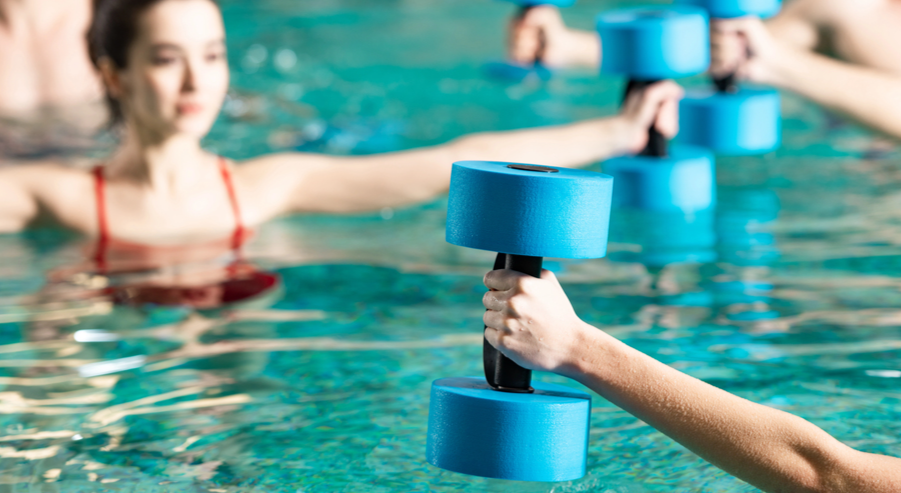
- Aqua strength: Uses foam dumbbells, paddles, or gloves to emphasize muscular endurance
- Dance-inspired aqua classes: Music-driven and social, useful for motivation and mood
A Simple 30-Minute Water Aerobics Workout
This balanced session fits most beginners to intermediates. Adjust tempo and range of motion to stay within a comfortable effort, about a 5-7 out of 10 on perceived exertion.
- Warm-up (5 minutes): Easy water walking forward and backward; gentle arm circles below the surface; side steps with light torso rotations.
- Cardio block (10 minutes): 1 minute water jogging; 1 minute jumping jacks (arms sweep under water); 1 minute cross-country ski (alternating arms and legs); 1 minute fast water walk with high knees; 1 minute recovery walk. Repeat cycle twice.
- Strength block (10 minutes): 2 sets of 12-15 squats to calf raise; 2 sets of 12-15 push-pull chest/rows with foam dumbbells or palms; 2 sets of 10-12 lateral leg lifts on each side; 2 sets of 30-second front-plank holds while holding the pool edge (body long, gentle brace).
- Mobility and cool-down (5 minutes): Slow water walking; calf, hamstring, chest, and shoulder stretches supported by the wall; deep breathing with long exhales.
Move smoothly, the water should feel like supportive resistance, not a fight. If pain appears, reduce speed, range, or resistance; if it persists, stop and seek guidance. Recovery the next day should feel worked but manageable.
How Often and How Hard to Train
For general health, aim for at least 150 minutes of moderate-intensity aerobic activity per week. Thirty minutes five days per week is one way to reach that target. Once comfortable, adding one session of interval-based work can accelerate fitness gains.
A practical progression:
- Weeks 1-2: 2-3 sessions/week, mostly steady pace; learn movements.
- Weeks 3-4: 3 sessions/week; add one short interval block.
- Weeks 5-8: 3-4 sessions/week; lengthen one session to 40-45 minutes or add resistance.
- Ongoing: Mix steady, interval, and strength-focused days; keep at least one lighter recovery day.
Intensity cues that work well in water: being able to talk in full phrases but not sing indicates moderate effort; needing short sentences between breaths indicates vigorous effort. Stop and recover if breathlessness, dizziness, or chest tightness occurs.
Building Strength and Balance Without Pain
For people whose goal is better function, climbing stairs, carrying groceries, preventing falls, multi-directional moves are the priority. Water destabilizes just enough to challenge balance while keeping the environment safe. Aim for smooth control rather than speed. Useful movements include diagonal core pulls (reach up and across, then draw hands down toward the opposite hip), single-leg stands with gentle sculling (lightly hold the wall if needed), step-and-reach patterns moving forward, side, and back while sweeping arms under water, and rotational rows and presses with palms or foam dumbbells at chest depth.
Special Considerations for Mental Health
Exercise is an established tool for mood and anxiety disorders, and the pool environment often amplifies its effects. The pressure and soundscape of water can quiet racing thoughts, and the rhythmic nature of strokes or steps pairs well with therapeutic breathing techniques. To make a session a mental reset, start with three slow breaths (inhale through the nose, long exhale through pursed lips), sync breath to movement (exhale through effort, inhale through recovery), and set a simple intention for the session.
If trauma, body-image concerns, or sensory sensitivities make pools difficult, options remain. Choosing a quieter time of day, wearing clothing that feels secure, and letting instructors know what helps are all reasonable steps. Pace, position in the pool, and when to take space are always within the individual's control.
Comparing Water Aerobics with Land Exercise
Land exercise often builds bone density more directly through impact; water aerobics is the stronger choice when joints need a break or when motivation depends on comfort. Many people blend both, pool sessions for cardio and recovery, land sessions for resistance training and bone health. Water offers lower impact, higher comfort, full-body resistance, and soothing sensory input. Land exercise makes it easier to load bones and muscles heavily and is more convenient when no pool is available. The right mix is the one that gets done consistently.
Frequently Asked Questions
Do I need to know how to swim? No. Many classes are in shallow water, and deep-water options use flotation belts. Let staff know your comfort level.
Will I get my hair wet? It depends on the class and movements. Shallow-water routines can keep the head above water; a swim cap helps manage moisture.
Can I do water aerobics after joint replacement? Often yes, with the surgeon's clearance. The pool allows early, gentle strength and mobility work without impact.
Will I build real strength? Yes, especially muscular endurance. Adding resistance gear or tempo changes increases the challenge.
Is it safe with high blood pressure or diabetes? Usually, and it can be beneficial. Check with a clinician for individualized targets and medication considerations.
Bringing It into Your Care at Healing Sky
At Healing Sky, movement is treated as medicine, especially when it lowers stress and fits comfortably into daily life. Water aerobics is an accessible way to improve mood, reduce pain, and build fitness without aggravating joints. For people in therapy, pool routines can be paired with coping skills, breathwork, and pacing strategies to reinforce progress between sessions. For those managing depression, anxiety, trauma-related symptoms, or chronic pain, mind-body goals can be tailored so that pool time becomes part of the treatment plan.
If trying something new feels daunting, start with one short session this week, during a quiet hour, at a conversational pace, ending while you still feel good. Consistency, not perfection, drives results.