Written by Healing Sky Editorial Team. Clinically reviewed by Raul Rodriguez M.D.
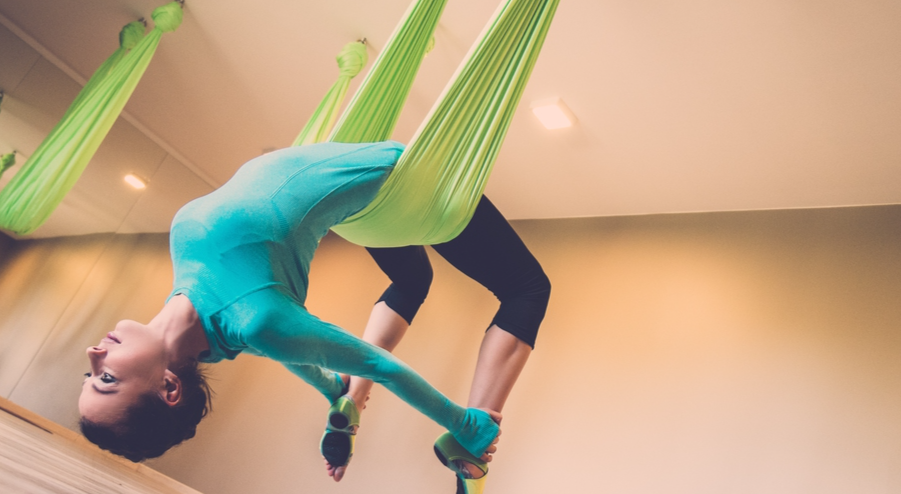
Aerial yoga uses a soft, supportive fabric suspended from a secure point to help you move through yoga-inspired shapes on and off the ground. You might sit in the hammock, lean into it for support, or invert with your hips above your heart. While it looks playful and artistic, the practice can be deeply therapeutic when taught well, not only for its strength and mobility benefits but also for the ways it can reduce stress, improve mood, and rebuild trust in the body.
Unlike traditional mat classes, aerial yoga changes your relationship to gravity. The hammock acts like a partner: it bears some of your weight, cushions sensitive joints, and offers tactile feedback that can quiet a restless nervous system. You don't have to perform big acrobatic tricks to benefit. Most beginners start close to the ground, exploring gentle, supported positions that feel both safe and empowering.
How Aerial Yoga Works
Think of the hammock as a movable prop. It can be set at hip height for standing poses, lowered for seated or reclined shapes, or adjusted to cradle the pelvis and spine. When rigged correctly, it supports dynamic movement with less compression on wrists, knees, and the lower back. Small shifts in pressure and traction help many people find space in stiff areas without forcing range of motion.
From a mental health standpoint, the hammock's firm, enveloping contact may offer a regulating sensory input, similar to a weighted blanket, yet more active. Rhythmic swaying can link breath and movement and may stimulate the vagus nerve, supporting a calmer baseline. The novelty of learning something new can also stimulate motivation centers in the brain, which may be especially helpful for depression-related apathy.
Mental Health Benefits
Aerial yoga won't replace therapy or medication when those are needed, but it can be a powerful complement. The practice blends mindfulness, playful exploration, and progressive challenge in a way that many people find stabilizing and confidence-building. Slow breathing and gentle traction tend to ease stress, while the nervous system gradually learns that novelty can feel safe rather than threatening. Small wins in the hammock build self-efficacy that carries into daily life, and the body awareness developed through the practice, tracking sensation, noticing tension, adjusting in real time, is a core skill for emotion regulation. Evening classes that emphasize restorative work can also support better sleep.
Physical Benefits
Most people arrive curious about inversions, but the day-to-day gains often come from simpler, supported positions. Because the hammock can offload some body weight, it enables strength and mobility training that is friendlier to vulnerable joints. Many practitioners notice spinal decompression sensations without aggressive force, along with core and hip strength built through controlled transitions and holds. Shoulder mobility can improve with potentially less strain on wrists and elbows than some mat-based flows, and balance and coordination tend to sharpen as you learn to negotiate a moving support.
Is Aerial Yoga Safe?
When taught by qualified instructors using professional rigging, aerial yoga is generally safe for healthy adults. Safety depends on appropriate progressions, secure equipment, and respect for your limits. The goal is not to "tough it out" but to build capacity gradually. Inversions can be optional, and many therapeutic classes never leave low heights yet still deliver results.
That said, some medical situations require special care or skipping specific moves altogether. The primary concerns are the effects of inversions on blood pressure and intraocular pressure, the pull of the fabric on certain tissues, and the balance demands of moving with a suspended prop.
Mental Health Cautions
Aerial yoga can be emotionally evocative. Cocoon-like shapes may feel soothing for some and triggering for others. Inversions and spinning can provoke dizziness or panic in sensitive systems. If you live with trauma, panic disorder, bipolar disorder, an eating disorder, or significant dissociation, choose a trauma-informed instructor, start with grounded work, and keep communication open with your therapist or prescriber. For trauma survivors specifically, ask for clear consent-based cueing and options to opt out of touch. For panic, begin without inversions or spins and practice longer exhales. For bipolar disorder, avoid sleep loss around late classes and monitor for activation. For eating disorders, approach the practice as skill-building rather than calorie burning.
Who Should Modify or Avoid Inversions
You can practice aerial yoga without ever going upside down. If any of the following apply to you, stick with non-inverted shapes unless your medical team clears you and your instructor is trained in modifications:
- Uncontrolled high blood pressure or heart disease
- Glaucoma, retinal issues, or recent eye surgery
- Recent surgery, acute injury, or spinal instability
- Pregnancy, especially the second and third trimesters, unless cleared by a prenatal specialist
- Severe vertigo, vestibular disorders, or frequent migraines triggered by pressure changes
- Advanced osteoporosis with fracture risk
- Ehlers-Danlos syndrome or marked hypermobility due to joint strain
- Post-concussion symptoms or traumatic brain injury with motion sensitivity
- Dysautonomia or POTS, monitor tolerance to position changes
What a Beginner Class Looks Like
A standard beginner class runs 60-75 minutes. You'll likely start with grounding on the mat, then learn how to hold, lean into, and sit in the hammock at a low height. Expect simple, supported shapes, like a seated forward fold using the fabric as a sling, a gentle lunge with the front thigh cradled, or a reclined position where the hammock supports your sacrum. Inversions, if offered, are introduced as an option with careful spotting and clear exit strategies. Class usually ends with a restful "cocoon" savasana, lying fully inside the hammock to unwind.
What to Wear and Bring
Clothing choices matter more than you might think. Aim for smooth, fitted garments to avoid catching the fabric and to stay comfortable when the hammock presses into the skin. Wear tops with sleeves and leggings or joggers without zippers or metal hardware. Remove jewelry, watches, and hair clips to protect the fabric and yourself, and tie long hair before class. Avoid lotions or strong perfumes beforehand, as the fabric can become slippery or irritating. Bring water and a light layer for the cool-down.
Studio or At-Home Practice?
Beginners are better served starting in a reputable studio. Professional rigging, regular equipment inspections, and instructors trained in progressions make a real difference. If you eventually explore at-home practice, consult a qualified installer who understands load ratings and the structure of your space. Portable stands and doorway systems exist, but they still require adherence to weight limits and fall-zone safety. Stay with studio setups until you are confident and well-supported.
How Often to Practice and How to Progress
For most beginners, one to two classes per week is a reasonable starting point. It is frequent enough to build muscle memory, yet spaced to allow tissues and the nervous system to adapt. Early goals are simple: develop comfort getting in and out of the hammock, learn three or four supported shapes that reliably calm your system, and discover your edge without crossing it.
As you progress, add complexity slowly, perhaps longer holds, gentle transitions, or a brief supported inversion if appropriate. Keep at least one day between higher-intensity sessions. Cross-training with walking or light strength work helps balance the pulling and hanging aspects of aerial practice.
A Simple Breathing Practice in the Hammock
Breath anchors the nervous system. Use this short exercise before or after class, or anytime you want to settle:
- Sit or recline with the hammock supporting your back or hips.
- Inhale through the nose for a count of 4.
- Exhale through the nose for a count of 6.
- Continue for 2-4 minutes, letting the exhale soften your jaw and shoulders.
Longer exhales tend to activate the body's calming pathways. If you feel lightheaded, shorten the counts and return to a natural breath.
A Trauma-Informed, Consent-Based Approach
Aerial yoga is most therapeutic when your sense of safety is centered. That means instructors ask before offering touch, demonstrate clear exits from each shape, and normalize opting out. Awareness of sensory needs also matters, bright lights, loud music, and rapid spins may overwhelm some students. The best classes allow you to stay low, reduce movement, and focus on breath without apology.
If you are working through trauma, tell your instructor what helps, for example, keeping the hammock open rather than fully enclosed, or staying near an exit. Your comfort is not a detour from progress; it is the path.
Integrating Aerial Yoga into a Mental Health Plan
Behavioral activation is a common approach for depression, and graduated exposure with a sense of safety is central to anxiety treatment. Aerial yoga can serve both aims: it invites manageable challenge, teaches regulation through breath and movement, and builds mastery in small, repeatable steps. To get the most from it, set a clear intention before each class, for example, "I'm here to practice slowing down my breathing under mild challenge." Track your mood, sleep, and anxiety for two weeks after starting, and share those observations with your therapist or psychiatrist so they can adjust your plan accordingly. Pairing classes with a brief journal note or a calming routine at home can reinforce what you notice on the mat.
Common Myths and Realities
Aerial yoga's social media image can be intimidating, and a few persistent misconceptions are worth addressing. The practice is not only for acrobats, beginners often stay near the ground and never invert. Flexibility is not a prerequisite; the hammock helps you meet the pose instead of forcing range of motion. With good instruction and rigging, aerial yoga can actually be gentler than many mat classes, making the "you must be super fit" assumption unfounded. And while many people feel relief in their backs, sustainable change comes from gradual strength, mobility, and habits off the mat as well.
Before Your First Class
Ask about instructor training, rigging inspections, and posted weight limits. Confirm that mats are placed under each hammock and that there is adequate space between stations. Make sure the beginner class offers options throughout, with inversions presented as optional rather than expected. Share any medical conditions privately before class and ask for modifications. Stop immediately if you notice sharp pain, numbness, or visual changes.
What If You Get Dizzy, Anxious, or Sore?
Mild dizziness can happen as your vestibular system adapts. Keep your gaze steady, reduce swaying, and come to a seated or standing position. Anxiety often eases when you lengthen your exhale and return to a grounded pose with two feet on the mat and the hammock at your back. Gentle post-class soreness is normal; sharp pain is not. Hydrate, add a brief walk the next day, and use heat or a warm shower to ease muscles. If symptoms persist or escalate, pause and consult your clinician.
A Gentle Beginner Sequence
Without prescribing exact reps or timings, here is how a first session might flow, with everything staying low and steady and breath as the priority. Begin with grounding, seated breath with the hammock supporting your mid-back. Move into mobility work using seated hamstring and hip openers with the fabric cradling one leg. Add a supported lunge with light core engagement and slow transitions for strength. Practice balance with a standing pose and one hand on the hammock for feedback. If you feel ready, try a brief hip hang at very low height for gentle traction, and skip it if you are unsure. Close with a reclined cocoon, longer exhales, and a cooling body scan.
Special Considerations for Specific Conditions
Certain patterns come up often when people bring aerial yoga into a mental health context, and a few condition-specific notes can help you personalize your approach. For anxiety and panic, choose classes labeled "restorative" or "beginner," start with zero inversions, and aim for steady, predictable rhythms. For depression, leverage the novelty by committing to two classes in the first two weeks and scheduling them in daylight when energy tends to be better. For ADHD, the hammock's tactile input and movement can improve focus, ask for clear, step-by-step cues and minimal idle time between shapes. For insomnia, prefer earlier evening classes that end with extended relaxation and avoid intense spins or stimulating music late at night. For chronic pain, prioritize gentle traction, small ranges, and consistency over intensity, and ask for extra padding or fabric wraps where the hammock contacts sensitive areas.
Costs, Access, and Practical Tips
Prices vary by region, but many studios price aerial yoga slightly above standard yoga classes due to equipment and smaller class sizes, often 6-12 students, which means more individualized attention. Ask about intro series, beginner workshops, or package discounts that make the first month more affordable. If transportation or scheduling is a barrier, look for daytime classes, weekend workshops, or short series designed for newcomers. Arrive 10 minutes early to adjust your hammock height under instructor guidance, and keep your first class gentle even if you are athletic in other settings. A calmer entry builds a safer, longer-lasting practice.
When to Pause and Seek Care
Stop and seek medical guidance if you experience any of the following:
- Severe or persistent headache after inversions
- Vision changes
- Chest pain or sudden shortness of breath
- New numbness or weakness
- Worsening dizziness that does not resolve with rest
On the mental health side, if you notice escalating anxiety, panic that lingers beyond class, sleep disruption, or signs of mood elevation such as racing thoughts, decreased need for sleep, or impulsivity, check in with your clinician before continuing.
Getting Started
Aerial yoga's value is not in the photos, it is in the way a simple fabric can change your inner state. By meeting you where you are and adding just enough support or challenge, the hammock turns movement into a dialogue with your nervous system. For mental health, the skills that builds, listening, modulating, choosing, generalize to difficult conversations, crowded rooms, and long days.
Start with a true beginner or restorative class at a reputable studio. Tell the instructor what you hope to feel more of, calm, confidence, or strength, and what you would like to avoid, whether that is spinning, pressure on a tender area, or enclosed shapes. Move slowly. Breathe longer on the exhale. Opt out when needed.
Healing Sky can connect you with a provider who can help you decide whether aerial yoga fits your plan and how to adapt it for anxiety, trauma recovery, ADHD, or chronic pain.