Written by Healing Sky Editorial Team. Clinically reviewed by Cynthia Abraham D.O.
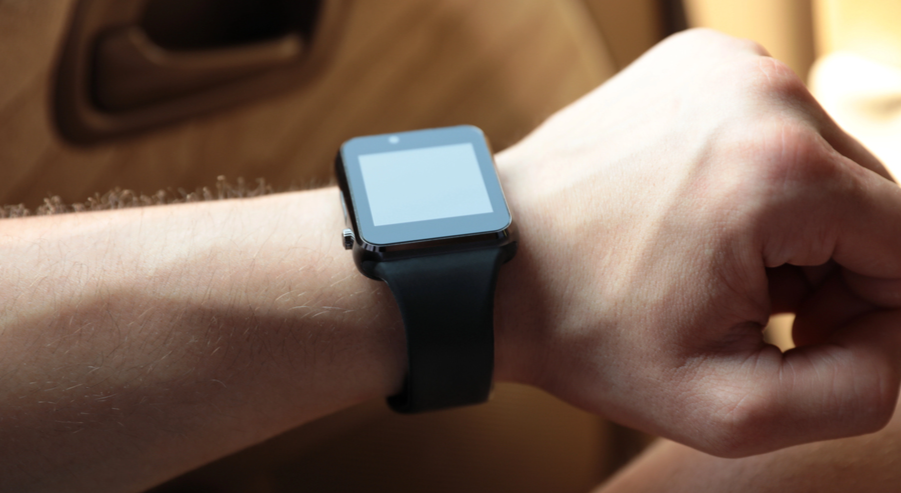
If you've heard clinicians or researchers mention "Affectiva Q" and wondered what it is, here's the short version: Affectiva Q, often called the "Q Sensor," was a wrist-worn biosensor built to estimate emotional arousal from the body's stress signals. It measured electrodermal activity (EDA, also called galvanic skin response), along with skin temperature and motion, and could stream or store the data for later analysis. It didn't read minds or diagnose mental health conditions; it captured a physiological signal tied to the fight-or-flight system, so people could study how stress and excitement changed over time in the real world. (mobihealthnews.com)
The device came out of an MIT Media Lab spinoff, Affectiva, as part of the early wave of "Emotion AI." Initially explored to better understand emotional cues in children on the autism spectrum and other neurodevelopmental conditions, it later found research uses in epilepsy, human-computer interaction, and advertising research. (news.mit.edu)
What the Q Sensor Was
The Q Sensor was a research-grade wearable that tracked EDA (a sweat-based signal of sympathetic nervous system activity), skin temperature, and motion. It brought lab-quality stress and arousal monitoring into daily life, enabling longer and more naturalistic recordings than traditional lab setups allowed. Clinically, it was useful for research and behavioral monitoring, not as a standalone diagnostic device. Affectiva discontinued the Q Sensor on April 30, 2013, and supported existing customers through April 30, 2014. (mobihealthnews.com)
Where Affectiva Q Came From
Affectiva spun out of the MIT Media Lab with a focus on measuring emotion from both physiology and facial expressions. The team originally explored wearables to understand stress responses in children on the autism spectrum, where outward behavior can diverge from internal state, by quantifying skin conductance at the wrist. That work demonstrated that a small, comfortable wrist sensor could produce clinically useful streams of arousal data in daily life. (news.mit.edu)
As the company evolved, it pivoted toward "facial coding" software used in media and advertising research and later into automotive emotion sensing. In 2021 Affectiva was acquired by Smart Eye, reflecting the broader arc from a single research wearable to enterprise Emotion AI. (prnewswire.com)
What the Q Sensor Measured and What It Didn't
The Q Sensor captured three main signals: electrodermal activity, skin temperature, and motion via accelerometry. EDA reflects minute changes in skin conductance caused by sweat gland activity under sympathetic nervous system control. These shifts rise with heightened arousal, whether from stress, surprise, excitement, or fear, and settle as arousal decreases. Skin temperature provided context, such as distinguishing a cold environment from a warming trend during exercise, while accelerometry helped separate physical activity from stillness and flag artifacts from movement. (mobihealthnews.com)
Two limits of EDA are worth stating plainly. First, EDA measures arousal, not emotional valence: a spike can reflect anxiety, but it can equally reflect excitement, and context is required to interpret it. Second, EDA is not a diagnostic tool. It is one data stream that can complement a clinical assessment, not replace one.
How Clinicians and Researchers Used Q Data
Because the Q Sensor was compact and could collect data over days, it opened up research questions that traditional lab-based sensors couldn't easily answer. Teams working in autism and behavioral support used wrist EDA to look for rising arousal before behavior worsened, helping caregivers intervene earlier and better understand triggers. Increased EDA often preceded challenging behaviors in those studies, suggesting potential for early warning, though the signal was not perfect. (fierceelectronics.com)
In epilepsy monitoring research, algorithms combining EDA with wrist motion detected most generalized tonic-clonic seizures in study samples, with relatively low false alarms. These were early research results, not a guarantee for any individual, but they helped catalyze subsequent seizure-alert wearables. (pubmed.ncbi.nlm.nih.gov) Developers in human-computer interaction also experimented with real-time Bluetooth streaming from the Q Sensor to adapt games or experiences to a user's arousal level. (mobihealthnews.com)
Strengths and Limitations of EDA Wearables
Even though Affectiva Q is discontinued, its strengths remain instructive for any modern EDA device. Continuous, real-world recordings capture naturalistic data rather than lab snapshots. Wrist placement is generally comfortable and acceptable for long wear, keeping participant burden low. EDA also provides an autonomic signal less prone to self-report bias, which can be useful in therapy, research, or coaching settings. Combining EDA with motion and temperature gives a fuller picture than any single stream alone. (mobihealthnews.com)
The limitations deserve equal attention. Arousal is ambiguous: an EDA peak might mean anxiety, or it might reflect excitement, surprise, caffeine, or a brisk walk, and context is always needed to interpret it. Artifacts from handwashing, fidgeting, and rapid movement can distort the signal, and dry skin or poor sensor contact degrades data quality. EDA does not diagnose anxiety disorders, PTSD, depression, or ADHD. High-quality clinical care integrates multiple signals, including sleep, activity, heart rate, subjective mood, and life context, rather than relying on one metric in isolation.
Is Affectiva Q Still Available?
No. Affectiva ended sales of the Q Sensor on April 30, 2013, and supported existing customers through April 30, 2014, as the company shifted focus to facial expression analytics and enterprise applications. Today, Affectiva's technology lives on within Smart Eye following the 2021 acquisition. (mobihealthnews.com)
Evaluating a Modern EDA Alternative
Anyone exploring EDA-enabled tools today should start by clarifying the goal: understanding personal triggers for panic, tracking progress in therapy, supporting biofeedback, or contributing to a research study each calls for different features. From there, it helps to match device capabilities to that use case, looking for reliable EDA sampling, time-stamped event marking, and the ability to export raw data for structured analyses. Comfort and wear time matter practically: a device that gets worn consistently outperforms a technically superior one that stays in a drawer.
Privacy deserves as much attention as performance. Any data reflecting the nervous system is sensitive, so it is worth reviewing how data are stored, who can access them, and how they can be deleted. Working with a clinician or researcher to build a short, structured plan, covering baseline weeks, agreed events to mark, and regular review sessions, turns raw signals into interpretable findings.
How EDA Can Support Mental Health Care
EDA functions as a helpful adjunct when used alongside clinical judgment, not as a replacement for it. Many patients find it clarifying to see how caffeine, sleep debt, or interpersonal conflict show up in their physiology, and that recognition can itself be motivating. Pairing EDA trends with a simple digital or paper log helps identify patterns: which environments, interactions, or times of day tend to elevate arousal. In CBT, DBT, and exposure-based therapies, EDA data can anchor discussions about habit loops, safety signals, and recovery time. Over weeks, it becomes possible to track whether baseline arousal is falling, how quickly it recovers after spikes, and whether coping strategies are shifting the pattern.
An EDA trace is a conversation starter, not a final answer. It works best when paired with the patient's own observations and a clinician's judgment.
Practical Tips for Getting Usable EDA Signals
Getting clean data from an EDA wearable depends on a few consistent habits. Wear the device as the manufacturer directs, typically on the non-dominant wrist, with secure but comfortable contact. Before making any changes to behavior or treatment, collect at least one to two weeks of ordinary-life baseline data so there is something to compare against. Mark notable events, whether a panic spike, an argument, a workout, or caffeine intake, either with the device's event marker or a quick written note. Wash and fully dry hands before placing the device, avoid lotions under the electrodes, and minimize fidgeting during recordings. Reviewing daily or weekly patterns rather than minute-by-minute noise makes the data far more interpretable, especially when compared alongside sleep, step counts, heart rate, calendar stressors, and subjective mood.
Frequently Asked Questions
What's the difference between EDA and "stress"? EDA reflects sympathetic arousal, which often correlates with stress but also rises with positive excitement. It functions as a volume knob for the body's alerting system, not a label for the emotion itself.
Could an EDA wearable predict a panic attack? Sometimes a slow rise in EDA appears before symptoms, and some people find that useful as an early cue to ground or breathe. It is not a reliable alarm, however, and it is not a replacement for learning skills that work even when no warning comes.
Was Affectiva Q accurate for seizures? Early research combining wrist EDA with motion detected the majority of generalized tonic-clonic seizures in monitored settings, with relatively few false alarms. That work helped inspire later devices, but it was a research-context finding, not a guarantee for any individual. (pubmed.ncbi.nlm.nih.gov)
Why did Affectiva stop making the Q Sensor? The company shifted its focus from wearables to facial expression analytics used in media and later automotive applications, ending Q Sensor sales in 2013. (mobihealthnews.com)
Is Affectiva still around? Affectiva's technology and team became part of Smart Eye in 2021, continuing Emotion AI work largely outside of healthcare wearables. (en.wikipedia.org)
A Practical Path Forward
Affectiva Q played a real role in bringing emotional arousal sensing into everyday life. The core idea, capturing a sympathetic nervous system signal to better understand how the mind and body respond to the world, remains relevant to current wearables. A structured approach helps: define a specific question, collect two weeks of baseline data without changing habits, add one intervention at a time such as sleep consistency, caffeine timing, breathwork, or mindfulness, and review regularly with a clinician who can interpret the numbers in context and keep changes safe and sustainable.
Healing Sky can connect you with a provider experienced in blending wearable data with evidence-based care. If you're looking for a plan that uses EDA data alongside therapy or medication management, reach out to get matched with a provider.