Written by Healing Sky Editorial Team. Clinically reviewed by Eric Spinner PsyD
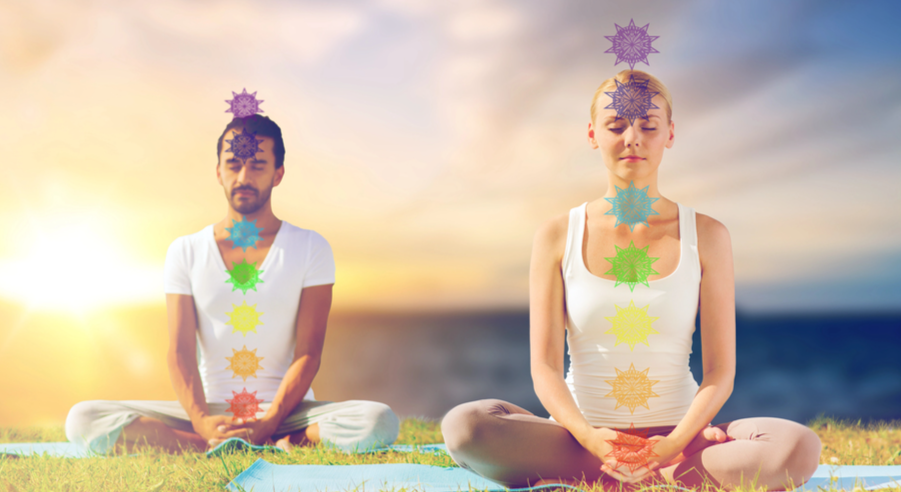
Chakra meditation is worth understanding on its own terms before deciding whether it belongs in a mental health routine. The practice uses focused attention, breathing, and imagery to move through seven symbolic "energy centers" along the spine and head. Whether someone approaches chakras as literal energies or as a useful metaphor, the structure gives the mind a concrete path to follow, which can make meditation more accessible than open-ended awareness practices.
Clinically, chakra meditation functions as a mind-body tool. It can help regulate the nervous system, increase self-awareness, and support work already underway in therapy or medical care. It is not a cure-all, and it should not replace evidence-based treatment for anxiety, depression, trauma, or other conditions. Think of it as one branch of a healthy routine, alongside sleep, movement, nutrition, therapy, and medication when prescribed.
How Chakra Meditation May Help
Many of its benefits overlap with what research shows in other well-studied meditation and breathwork approaches. The distinctive feature is the use of seven symbolic stations in the body, which gives beginners a concrete scaffold and allows more experienced practitioners to target specific emotional goals.
Focusing on one center at a time builds sustained attention and reduces mental clutter, a process sometimes called attention training. Noticing sensations inside the body improves mind-body communication and emotional literacy, which clinicians refer to as interoception. Slower, deeper breathing tends to shift the body toward a calmer parasympathetic state. Visual cues and simple sounds serve as anchors that steady the mind, and each chakra's theme can guide intention-setting in ways that connect practice to personal values.
The Seven Chakras
Different traditions offer variations. The outline below reflects common modern associations and is a starting point, not a rulebook.
| Chakra | Location | Themes | Color | Seed Sound |
|---|
| Root (Muladhara) | Base of spine, pelvic floor | Safety, stability, grounding | Red | Lam |
| Sacral (Svadhisthana) | Lower abdomen, hips | Creativity, pleasure, flexibility | Orange | Vam |
| Solar Plexus (Manipura) | Upper abdomen, near navel | Willpower, confidence, boundaries | Yellow | Ram |
| Heart (Anahata) | Center of chest | Love, compassion, forgiveness | Green | Yam |
| Throat (Vishuddha) | Throat and neck | Voice, truth, expression | Blue | Ham |
| Third Eye (Ajna) | Between the eyebrows | Insight, intuition, perspective | Indigo | Om |
| Crown (Sahasrara) | Top of head | Connection, meaning, spacious awareness | Violet/white | Aum or silence |
A Step-by-Step Guide for Beginners
Set aside 10-15 minutes. A quiet space helps, but perfection is not required. The goal is not a blank mind; the goal is to notice gently and return to focus.
- Posture: Sit upright on a chair or cushion, feet grounded. If sitting is uncomfortable, lie down with knees supported.
- Anchor breath: Inhale through the nose for 4 counts, exhale for 6. Adjust counts to be easy and smooth.
- Intention: Pick a simple aim such as "calm," "clarity," or "self-kindness."
- Root: Bring attention to the base of the spine. Imagine a steady red glow or the feeling of weight in the feet. Breathe there for 4-6 cycles; silently whisper "Lam" if helpful.
- Sacral: Shift to the low belly and hips. Picture a warm orange light or a gentle tide. Breathe; silently whisper "Vam" if helpful.
- Solar plexus: Focus on the area above the navel. Imagine a bright yellow sun and a sense of healthy boundaries. Breathe; silently whisper "Ram" if helpful.
- Heart: Rest awareness in the center of the chest. Picture a green light. Invite warmth for yourself and others; silently whisper "Yam" if helpful.
- Throat: Sense the neck and jaw softening. Imagine blue light and honest, kind speech; silently whisper or hum "Ham" if helpful.
- Third eye: Bring attention between the eyebrows. Picture indigo light and clear seeing; silently repeat "Om" if helpful.
- Crown: Rest attention at the crown. Imagine a light, open space. Linger in quiet for a few breaths.
- Integrate: Sweep awareness down through all centers with one slow exhale. Notice any ease or change. Close with gratitude.
To make practice stick: go shorter than seems necessary, because five consistent minutes beats thirty once a month. Pairing practice with a daily cue, such as after brushing teeth or before lunch, reduces the friction of getting started. If the breath feels activating, switch to a counted exhale only or breathe naturally.
A Brief Guided Script
Settle, and feel the seat and feet. Inhale gently, exhale longer. "Right now, I choose steadiness." Sense the base of the spine; let the breath fill that space. Imagine red light rooting into the chair and the floor. Shift to the low belly, a soft orange glow, and allow hips and abdomen to loosen. Move to the solar plexus; picture a yellow sun that warms without burning. At the heart, picture green light and breathe as if the chest could smile, soft, open, kind. At the throat, imagine blue light, releasing the jaw and tongue, and welcome the true voice. At the brow, notice an indigo point of calm focus, the mind like a wide, friendly sky. At the crown, sense spaciousness above and around. Rest. Then gather attention back into the whole body, from crown to feet, breath by breath. Open the eyes when ready.
Benefits People Often Notice
Research on chakra-specific practices is limited, but many people report benefits that mirror broader meditation findings, and these changes typically build over weeks rather than days. Reduced reactivity to stress is common, along with better sleep onset from downshifting the nervous system at night. Emotional awareness tends to improve, giving people more language for what they feel. Self-compassion often increases while harsh inner criticism softens.
From a physiological standpoint, slow regular breathing and focused attention can elevate heart rate variability, relax muscle tension, and reduce perceived pain. These shifts may support therapy outcomes and help people practice skills between sessions.
Using Chakra Themes for Targeted Goals
One practical advantage of chakra meditation is the ability to choose a focus area that fits the day. Feeling scattered or unsafe calls for the root: contact with the feet, a strong exhale, imagery of mountains or solid ground. Creative blocks or rigidity respond well to the sacral: hip mobility, fluid breath, images of water, and permission to play. Struggling with boundaries or motivation points toward the solar plexus: upright posture, core engagement on the exhale, and "I can" statements.
Grief or irritability often eases with heart-centered practice, a hand on the chest, warm breath, and phrases of loving-kindness. Difficulty speaking up calls for the throat: a lengthened neck, relaxed jaw, and gentle humming. Overthinking responds to the third eye through single-point focus or candle gaze. Feeling isolated is addressed at the crown through silence, awe practices such as watching the sky or stars, and gratitude.
Trauma-Sensitive Options
Meditation should never feel like a forced march. For people with a trauma history, certain body sensations or stillness may be uncomfortable, and the practice should be adjusted to stay within a tolerable, empowered range. Keeping the eyes open and softly focused on a steady object is often safer than closing them. Breath counting can be replaced with an external anchor, such as feeling the chair or the warmth of the hands. Sessions shortened to 2-5 minutes, alternated with movement like standing, stretching, or walking, reduce the risk of overwhelm.
"Pendulation" is a useful technique: briefly touch a challenging area, such as a tight chest, and then return to a neutral or pleasant area, such as the hands or feet. Orienting to the room by naming a few visible objects reinforces safety in the present. If an image is triggering, swap it for a neutral one, such as a small stone or a gentle light.
If distress spikes, stop. Open the eyes, stand up, place a hand on a cool surface, or step outside for fresh air. For persistent distress, consult a clinician before resuming.
What the Science Says
Modern science has not identified chakras as anatomical structures. The psychological and physiological ingredients of chakra meditation, including breath regulation, sustained attention, body awareness, and compassionate imagery, have been studied in related practices. Across multiple clinical areas, meditation and slow-breathing interventions are associated with lower perceived stress, improved anxiety symptoms, and better emotional regulation. Evidence varies in quality, and outcomes are personal. Benefits grow with patient, consistent use.
As with any wellness modality, grand promises warrant skepticism. Chakra meditation can be helpful; it is not a substitute for professional diagnosis and treatment when those are needed.
Safety, Cautions, and When Not to Push
Meditation is generally low-risk, but safety matters, especially for people with a psychiatric or medical history.
- People with bipolar disorder who are entering a high-energy or manic state should prefer grounding, brief, body-based practices and coordinate with their prescriber before intensive retreats or long sessions.
- People who experience psychosis or severe dissociation should work with a clinician who understands contemplative practices; external anchors and shorter practices are usually safer.
- If breath-holding, strong breathwork, or rapid breathing causes lightheadedness, skip it. Favor natural breathing or a gentle, extended exhale.
- People who are pregnant or have heart conditions, lung conditions, or uncontrolled blood pressure should avoid breath retention and straining, and should sit rather than lie flat if dizziness occurs.
- Never meditate while driving or in situations requiring full alertness.
Stop immediately and seek help if any of the following occur: escalating hopelessness, active suicidal thoughts, inability to sleep for several nights, new hallucinations, or panic that does not settle with grounding.
Tailoring Practice to Mental Health Goals
For anxiety, the root, heart, and long exhalations are the most useful combination. Sitting supported, pressing the feet into the floor, and adding a slow count on the outbreath works well before known stressors.
For depression, the solar plexus and heart centers pair with upright posture and slightly more energizing breathing, with equal inhale and exhale lengths. Active self-talk such as "One small step today" adds a behavioral dimension to the practice.
For trauma recovery, sessions should stay brief with eyes open, alternating grounding with gentle awareness of the heart or root. Coordinating with a therapist to align practice with the treatment plan is important.
For sleep, a soft heart-to-root descent in bed works well: feel the chest soften, then the belly, hips, legs, and feet, and let the exhale fade into rest.
Simple Mantras and Prompts by Center
Each center pairs a short mantra with a reflective prompt. Root: "I am here. I am safe enough right now" / Where do I feel supported? Sacral: "I allow flow" / What would bring 5% more ease to today? Solar Plexus: "I can" / What boundary or action matters most today? Heart: "I am kind to myself" / What can I forgive or soften by 1%? Throat: "I speak truth with care" / What needs to be said, and how can it be said kindly? Third Eye: "I see clearly" / What perspective am I missing? Crown: "I'm connected" / What gives today meaning?
Use these as gentle guides, not rules, to pair intention with sensation.
How Long Until Changes Appear
Some people feel calmer after the first session. More durable changes, including better focus, fewer spirals into worry, and kinder self-talk, usually emerge after 4-6 weeks of steady practice. If after a month there is no benefit at all, try a different time of day, shorten the session, or consult a clinician or meditation teacher for fine-tuning.
For Teens and Busy Adults
Chakra meditation adapts well to short attention spans and packed schedules. Teens often prefer movement or brief, theme-based practices: two minutes for the root before a test, one minute for the throat before a presentation. Parents and professionals may anchor a five-minute cycle to coffee or lunch. These micro-practices reduce the friction of getting started.
A 60-second root practice: stand, feel both feet, exhale longer, and picture a red light. A 90-second heart practice: hand on chest, three slow breaths, think of one person to appreciate. A 2-minute throat practice: relax the jaw, hum softly for five breaths, then speak the request.
Adapting an Existing Meditation Practice
Starting from scratch is not necessary. Many mindfulness or breathwork practitioners use chakras as a focused module once or twice a week. One option is to end a usual practice by scanning the seven centers on the final five breaths. Another is to choose one center as a monthly theme and pair it with an existing routine.
Practice Styles to Consider
Chakra meditation is flexible across formats. Stillness practice is the classic seated approach, cycling through centers with breath and visualization. Movement practice uses slow yoga or mindful walking, pausing at each center to feel its theme. Sound practice involves quiet humming at the throat or softly repeating seed sounds to support focus. Writing practice means one page after a session on "What does this center need today?" Art practice uses the colors associated with each center to inspire sketching or collage for emotional expression.
Pick one approach for a week, then reassess. Simplicity beats novelty when building a habit.
A Weekly Plan
Consistency is more useful than intensity. A realistic structure: Monday through Friday, 8-10 minutes in the morning cycling through all seven centers. One evening midweek, 12-15 minutes focused on a single center that matches the current need. On the weekend, a longer 15-20 minute practice or a mindful walk centered on root and heart.
Tracking practice by date and mood on a 0-10 scale for calm and energy adds useful data. Brief questionnaires like the GAD-7 for anxiety or PHQ-9 for mood can help a clinician spot trends over time. Bringing those notes to therapy or medication check-ins makes the practice part of the broader care conversation.
Troubleshooting Common Obstacles
Difficulty visualizing colors is common and easily worked around: replace images with simple sensations such as warmth, heaviness, or contact with clothing. A busy mind is not a failure; each time attention returns to the center, that return is the practice. Sleepiness during sessions often responds to a chair with a firm back, practicing earlier in the day, or shortening sessions. People who feel nothing in the body can start with the most obvious sensations: feet on the floor, breath at the nostrils, hands on the chest. Worry about doing it wrong is almost always unfounded: if breathing safely, returning attention kindly, and not causing harm, the practice is working.
Comparisons Worth Knowing
Mindfulness is open, nonjudgmental awareness of the present moment. Chakra practice is more structured and thematic, using body locations and imagery, and many people blend the two. Kundalini systems can include more vigorous breathwork and movement, while chakra meditation can be gentler and simpler. Reiki is a hands-on energy modality delivered by a practitioner, whereas chakra meditation is self-guided attention and breath practice. Adopting any particular belief system is not required to benefit; chakras can be approached as symbols that organize attention and intention.
When to Seek Professional Support
Meditation can complement care, but there are times when qualified help is essential. Reach out to a licensed therapist, psychiatrist, or primary care clinician if any of the following arise:
- Suicidal thoughts, escalating hopelessness, or self-harm urges
- Panic attacks that impair daily life
- Substance use increasing to cope with distress
- Intrusive memories or nightmares that are worsening
- New or worsening hallucinations, paranoia, or manic symptoms
If there is immediate danger, call emergency services or a crisis line right away.
Start Your Practice
Chakra meditation offers a structured way to connect with the body, calm the mind, and align daily actions with what matters. No particular theory of energy is required to benefit, only a few minutes, some curiosity, and a compassionate approach. Healing Sky can connect you with a provider who integrates mind-body skills like chakra meditation with evidence-based therapies and, when appropriate, medication management. To explore weaving this practice into a mental health plan, schedule a consult.