Written by Healing Sky Editorial Team. Clinically reviewed by Raul Rodriguez M.D.
Most people have taken a slow breath to calm down before a hard conversation or a stressful moment. Pranayama is the systematic version of that instinct: a set of techniques from the yoga tradition that teach deliberate control of the breath's depth, pace, and pauses to shift how the mind and body feel. With regular practice, many people report a steadier mood, less reactivity to stress, and clearer attention. The goal is not perfect stillness but a more flexible, resilient nervous system that can move from tension to calm when needed.
While the roots of pranayama are ancient, the skills are practical for modern life. Practice is possible at a desk, in a parked car before a difficult meeting, or at bedtime when the mind won't turn off. The techniques below are gentle, accessible, and clinically grounded. They are not a replacement for treatment when someone is struggling with anxiety, depression, PTSD, or other conditions, but they can be a strong complement to therapy and medication.
What Pranayama Means
"Prana" translates roughly as life force or breath; "ayama" means regulation or extension. Together, pranayama means the deliberate regulation of breath to influence physiological and mental states. In a yoga class, pranayama appears alongside postures (asana) and meditation. For mental health purposes, the simplest breath practices that create calm without strain are the most useful starting point.
Breath is both automatic and voluntary, which is what makes it such a useful tool. Choosing to slow and smooth the breath rapidly affects the nervous system: slower breathing tends to shift the body toward a parasympathetic (rest-and-digest) state, and gentle breath holds or humming may further quiet mental chatter and reduce reactivity.
Why Pranayama Matters for Mental Health
Anxiety, panic, rumination, insomnia, trauma reactivity, and chronic pain share a common thread: an over-alert nervous system. Pranayama offers a way to signal safety to the brain from the body upward. Unlike trying to think one's way to calm, breathwork acts through the body first, which is why a few minutes of steady, slow breathing can soften a racing heart and help intrusive thoughts lose their grip.
Clinically, pranayama functions as a bridge in several contexts: lowering baseline arousal before exposure therapy, grounding attention during panic or strong urges, helping someone transition from a high-demand workday to rest, and reducing the hyperarousal that blocks sleep.
How Pranayama Influences the Brain and Body
The breath functions as a steering wheel for the autonomic nervous system (ANS), the network that regulates heart rate, blood pressure, and digestion. Slow, diaphragmatic breathing gently increases vagal tone, which is associated with calm, connection, and better emotional regulation. Exhaling a bit longer than the inhale stimulates this calming response. Over time, many people notice higher heart rate variability (HRV), a marker of adaptable stress response.
Carbon dioxide (CO₂) tolerance is equally important. Rapid, shallow breathing can drop CO₂ levels and trigger dizziness, tingling, and anxiety. Gentle pranayama helps restore comfortable CO₂ levels by encouraging nasal, slower, and more complete breathing, sending the brain a clearer signal that the situation is safe.
In the short term, heart rate may slow and become more regular, muscles in the neck and shoulders may release some tension, and mind wandering may quiet. With consistent practice over time, stress recovery after hard moments tends to improve, physiological "false alarms" that fuel panic become less frequent, and there is more capacity to shift between alert and calm states as the situation calls for it.
Potential Benefits for Mental Health and Well-Being
Pranayama is not a cure, and the evidence base varies by technique and condition. The pattern seen clinically is that frequent, gentle breathwork makes the day feel more manageable and emotions less overwhelming. Many people also notice secondary gains: improved focus at work, fewer headaches from jaw clenching, and more patience in difficult interactions.
Commonly reported benefits include lower perceived stress and anxiety during the day, reduced frequency and intensity of panic symptoms, easier transitions into sleep with fewer nighttime awakenings, better concentration and task follow-through, and modest improvements in blood pressure and muscle tension.
Safety: Who Should Take It Slow or Get Clearance
Most gentle pranayama is safe for healthy adults, but some situations call for caution. Anyone who is pregnant, has significant heart or lung disease, severe asthma or COPD, uncontrolled high blood pressure, glaucoma, a seizure disorder, or a history of fainting should consult a clinician before attempting breath retentions or forceful techniques. Those with active PTSD symptoms should begin with simple, eyes-open practices to avoid feeling trapped or triggered.
Practical guardrails for beginners:
- Start with nasal, diaphragmatic breathing that is smooth and quiet.
- Avoid strong, rapid breathing (such as kapalabhati or bhastrika) if new to the practice, easily dizzy, or prone to migraines.
- Keep breath holds brief and comfortable; never strain or compete.
- If lightheadedness, tingling, or panic arises, pause, breathe gently, and resume only when settled.
Getting Started: Posture, Pace, and Duration
Choose a position that feels both stable and alert. Seated upright in a chair with back support is ideal: feet on the floor, shoulders soft, jaw unclenched. Lying down is fine if it aids relaxation, provided the practitioner stays awake.
Inhale through the nose, letting the belly and lower ribs expand first. Exhale through the nose, or softly through the mouth, with a sense of lengthening and ease. Aim for about 5 to 6 breaths per minute to start, which works out to roughly a 5 to 6 second inhale and 5 to 6 second exhale. Practicing for 5 to 10 minutes once or twice daily builds more benefit than occasional longer sessions.
A simple setup: choose a quiet space and a timer, sit tall with hands resting on the thighs or belly, soften the eyes or fix the gaze on a still point, and commit to gentle, nonjudgmental attention. When the mind wanders, return to the breath. Stop if symptoms worsen; restart more slowly.
Core Pranayama Techniques for Beginners
Diaphragmatic (Belly) Breathing
Place one hand on the upper chest and the other on the belly. Inhale slowly through the nose so the hand on the belly rises first, keeping the upper chest relatively quiet. Exhale with minimal effort, letting the belly soften toward the spine. This teaches the diaphragm to do the work and reduces overuse of neck and shoulder muscles. Two to three minutes of this establishes a calm baseline before other techniques.
Coherent or Balanced Breathing (5 to 6 Breaths per Minute)
Inhale through the nose for 5 to 6 seconds. Exhale through the nose for 5 to 6 seconds. Keep the breath smooth, like tracing a gentle wave. This pace may enhance vagal engagement and HRV. If 5 to 6 seconds feels long, start with 4 seconds each and build gradually.
Extended Exhale Breathing
Inhale through the nose for 4 seconds. Exhale for 6 to 8 seconds. The slightly longer exhale signals the nervous system to settle, making this technique well suited for pre-sleep wind-down, post-conflict decompression, and managing irritability. Avoid forcing the end of the exhale; keep it unhurried.
Box Breathing (4-4-4-4)
Inhale for 4 seconds, hold for 4, exhale for 4, hold for 4, then repeat. Visualizing tracing the sides of a square with each phase can help maintain the rhythm. Box breathing builds focus and steadiness, which is useful before a presentation or exam. If the holds create pressure or lightheadedness, reduce or skip the pauses and keep the breath moving.
Alternate Nostril Breathing (Nadi Shodhana)
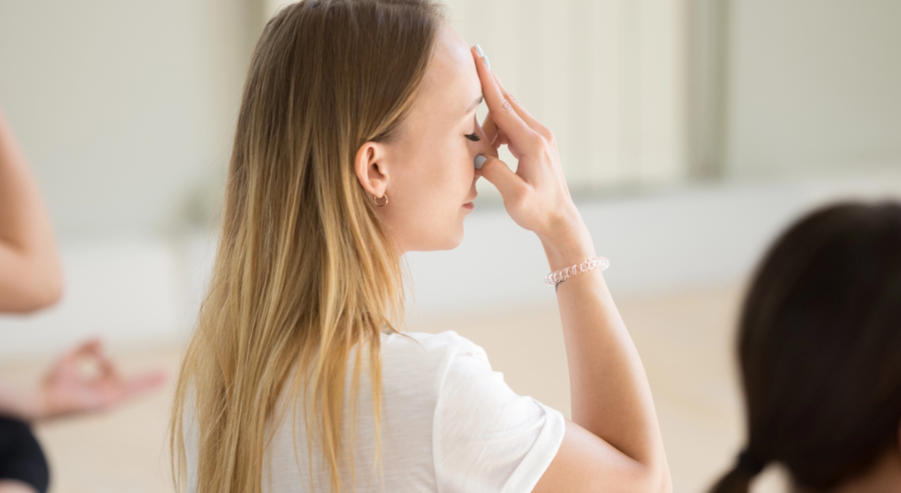
Sit comfortably. Use a finger to gently close the right nostril and inhale through the left. Switch, closing the left nostril, and exhale through the right. Inhale through the right, switch, and exhale through the left. That is one cycle. Continue for 3 to 5 minutes, keeping the breath comfortable. If one side is congested, do not force it; practice gentle diaphragmatic breathing instead.
Humming Bee Breath (Bhramari)
Inhale through the nose. On the exhale, make a soft humming sound until the breath naturally ends. The vibration may quiet mental noise and relax the jaw, sinuses, and throat, making this technique especially soothing for anxiety and insomnia. Keep the hum gentle to avoid throat irritation.
Ocean Breath (Ujjayi), Very Gentle
Slightly narrow the back of the throat, as if fogging a mirror with the mouth closed, creating a soft ocean-like sound on inhale and exhale. This adds focus and length without over-breathing. If throat tightness or dryness develops, release the constriction and return to regular nasal breathing.
Techniques to Postpone If New to the Practice
Kapalabhati (skull-shining breath), bhastrika (bellows breath), and long breath retentions are more stimulating and carry a higher risk of dizziness or anxiety. These are best saved for later, if at all, and learned with an experienced teacher.
Matching Techniques to the Goal
The right pranayama depends on the state to be cultivated. For reducing anxiety quickly, extended exhale breathing or coherent breathing are the most reliable options. For pre-sleep calm, coherent breathing or gentle bhramari work well. Box breathing with light holds or soft ujjayi can sharpen focus before work. Diaphragmatic breathing practiced twice daily supports panic prevention. Alternate nostril breathing for 3 to 5 minutes helps when irritability or overwhelm is high. Bhramari with a relaxed jaw and shoulders addresses tension headaches and jaw clenching.
A 10-Minute Daily Plan
Think of this as strength training for the stress response. A short, consistent practice shifts baseline more than occasional long sessions.
- 1 minute: Diaphragmatic breathing to settle in.
- 4 minutes: Coherent breathing (5 to 6 seconds in, 5 to 6 seconds out).
- 3 minutes: Extended exhale (in 4, out 6 to 8).
- 1 minute: Bhramari or silent breathing to integrate.
- 1 minute: Sit quietly and notice the after-effect.
If 10 minutes feels long, start with 3 to 5 minutes and add a minute each week.
Troubleshooting Common Issues
Most problems that arise during practice have simple fixes, and the solution is nearly always to do less, more gently. Dizziness or tingling usually means the breath is too fast or forceful; slowing down, softening, and shortening any breath holds resolves it. Trouble focusing is often helped by keeping the eyes slightly open and anchoring attention on the feeling of air at the nostrils or the rise and fall of the belly. Restlessness or impatience responds well to a shorter practice or a switch to humming breath, which gives the mind a tactile anchor.
Nasal congestion is a reason to skip nostril practices and use diaphragmatic breathing until clear. Feeling trapped or triggered calls for natural, steady breathing with no holds, practiced in a safe, well-lit space with eyes open. Sleepiness during daytime practice can be countered with box breathing using lighter holds, or by practicing standing.
Integrating Pranayama with Therapy and Medication
Breathwork complements, not replaces, evidence-based treatments. For anyone working with a therapist, pranayama functions as a portable skill that creates a window where CBT, DBT, or trauma-focused techniques can be used more effectively. A few minutes of coherent breathing before a session can reduce baseline arousal. During exposure work, extended exhale breathing helps maintain engagement without flooding. After sessions, gentle humming can support recovery.
Pranayama is generally safe alongside psychiatric medication. Anyone with cardiovascular or respiratory conditions, or who experiences dizziness or fainting, should check with their prescriber. Competitive breath holds or vigorous practices should be avoided by those taking medications that lower blood pressure or heart rate.
Supporting Children and Teens
Young people respond well to simple, playful breath practices. Keeping sessions short, concrete, and embodied, and inviting curiosity rather than perfection, makes the biggest difference. Names that resonate with kids help: "hot cocoa breath" (slow inhale, slow exhale) or "bee breath" (soft humming) are easy to remember and use. Sessions of 1 to 3 minutes repeated during natural transitions, such as after school or before homework, are more effective than longer infrequent sessions. Practicing together rather than instructing from a distance, and pairing breathing with slow shoulder rolls or a gentle stretch, helps discharge extra energy.
Building a Sustainable Habit
The most effective pranayama is the one that actually gets done. Tying practice to existing routines, such as after parking at work, during lunch, or right before turning off the bedside lamp, removes the friction of deciding when to practice. A simple timer and two weeks of tracking how the body feels before and after can reveal how much calmer the day becomes with only 5 to 10 minutes of practice.
Keeping the practice small enough that it never feels like a burden is the key to consistency. Plateaus are normal and pass. Missing a day calls for resuming the next, not guilt or catch-up sessions.
Key Clinical Considerations
Extended exhale and coherent breathing are the safest, most broadly useful starting points for mental health goals. The effective dose is gentle and regular, not intense and rare. Breath holds and rapid breathing are optional and often unnecessary for mental health purposes. Integrating breathwork with therapy tends to strengthen both.
When to Seek Additional Support
If mood, anxiety, or sleep troubles are persistent or worsening despite regular self-care, professional support is appropriate before a crisis develops. A licensed therapist or psychiatrist can build a tailored plan that may include psychotherapy, medication, and lifestyle interventions alongside pranayama.
Seek urgent care immediately if any of the following occur:
- Thoughts of harming yourself or others.
- Chest pain, fainting, or sudden shortness of breath.
- Panic symptoms that do not ease with slow breathing and rest.
- New neurologic symptoms such as confusion, weakness, or severe headache.
In the United States, call or text 988 for the Suicide & Crisis Lifeline any time, or call 911 for immediate danger.
Connect with a Provider Through Healing Sky
Pranayama offers a practical, evidence-aligned way to calm the nervous system, sharpen attention, and build day-to-day resilience. No special equipment or long sessions are required, only a few minutes most days and a patient attitude toward the learning curve. For those who want support weaving breathwork into a personalized treatment plan that also addresses anxiety, depression, trauma, or sleep, Healing Sky can connect you with a provider who offers that kind of integrated care.
Begin with three minutes of coherent breathing today and notice how the body responds.