Written by Healing Sky Editorial Team. Clinically reviewed by Raul Rodriguez M.D.
Qigong (pronounced "chee-gong") is a gentle mind-body practice that blends slow movement, relaxed breathing, and focused attention. It can help settle an overactive stress response while improving energy, mood, and sleep. It is approachable for most bodies, requires no equipment, and can be done in five to ten minutes a day. When used alongside therapy and, when needed, medication, qigong becomes a useful tool for nervous system regulation and long-term mental health.
Qigong in Plain Terms
At its core, qigong teaches you to move and breathe in ways that calm the mind. The word "qi" refers to vitality or life-force; "gong" means practice or skill. No particular philosophy is required to benefit. If you prefer a modern framing, think of qigong as deliberate breathing and gentle mobility exercises that fine-tune how your brain and body handle stress.
Qigong grew from health, martial, and contemplative traditions in China. Some forms are flowing and meditative; others are still and breath-centered. The common thread is relaxed attention: moving with ease rather than force. People often describe a "settled" feeling after practice, with quieter thoughts, warmer hands, softer shoulders, and a steadier mood.
How Qigong Supports Mental Health
When anxiety, depression, burnout, or trauma take hold, the stress system becomes overprotective. Qigong adds "brakes" to that system. By lengthening the exhale and smoothing movement, it activates the parasympathetic nervous system, the body's rest-and-digest mode. Muscle tension eases, the heart finds a steadier rhythm, and the brain's threat circuits dial down.
Clinically, the most common effects are reduced physiological arousal (less jaw clenching, fewer stress headaches, less gut tension), more space between feeling and reacting, better sleep continuity, steadier energy with fewer afternoon crashes, and clearer focus with less mental noise. These changes compound over time. Ten minutes daily is often more effective than an hour once a week because it trains the stress response to reset throughout the day.
Qigong, Tai Chi, Yoga, and Meditation: What's the Difference?
These practices overlap, but each has a distinct character. Tai Chi consists of specific sequences of martial-arts-based forms and is closely related to qigong, but its choreographed movements make it more demanding to learn. Yoga typically includes stretching, postures, breathwork, and philosophy, and many styles can be physically demanding. Seated meditation trains attention and awareness without movement.
Qigong sits comfortably in the middle: slower and simpler than most yoga sequences, less choreographed than Tai Chi, and easier than seated meditation for people who feel restless or keyed up. If traditional mindfulness is difficult because the mind races, moving meditation like qigong can be a friendlier starting point.
The Essential Ingredients
Good qigong is not about perfect posture or mystical states. It rests on a few simple skills practiced consistently: soft belly breathing with a slightly longer exhale; a relaxed, lengthened spine with knees unlocked and shoulders easy; slow, circular, pain-free movements that match the breath; gentle attention on sensations such as feet on the ground or air across the hands; and a chosen quality to cultivate, like calm or steadiness. If those elements are present, you are doing qigong, even without knowing a single formal routine.
What the Evidence Suggests
Research over the past two decades points to reductions in anxiety and depressive symptoms, improvements in sleep quality, and better stress tolerance across diverse groups, from college students to older adults and people managing chronic illness. Studies also show improvements in heart rate variability, a marker of resilient stress response, and modest reductions in baseline cortisol.
The evidence is promising, not definitive. Qigong works best as an adjunct to a thoughtful treatment plan. It is worth recommending early because it is low risk, inexpensive, and gives people a direct experience of self-regulation they can feel within minutes.
Who May Benefit
Qigong is versatile and adapts to many needs. It is particularly useful for people experiencing:
- Anxiety and panic, especially with body-focused symptoms like chest tightness or dizziness
- Depressive symptoms marked by fatigue, slowed thinking, and low motivation
- Insomnia, including difficulty falling or staying asleep
- Burnout and chronic stress with muscle tension and headaches
- ADHD-related restlessness and mental clutter
- Trauma-related hyperarousal, numbness, or swings between the two
- Chronic pain or fibromyalgia, where gentle movement helps pain modulation
- Perimenopausal mood and sleep shifts, where breath-led regulation is valuable
Safety and When to Be Cautious
Qigong is generally safe when movements are gentle and breath is comfortable. That said, certain situations call for extra care or a clinician's input first.
- If you have bipolar disorder and are currently manic or hypomanic, favor brief, grounding practices and avoid breath-holds or energizing routines.
- If you live with psychosis, practice with a trusted clinician or experienced teacher who keeps you oriented to the here-and-now.
- If you have cardiovascular, respiratory, or balance problems, start seated and keep your breath natural. Stop if you feel lightheaded.
- If trauma memories surface, shorten sessions, keep eyes partially open, and anchor attention in the feet or hands.
- Pregnancy and the early postpartum period call for gentle movements, no straining, and no prolonged breath retention.
A good rule: nothing should hurt, force, or frighten. If it does, pause and adjust.
A Simple 10-Minute Routine
Use this sequence once or twice a day. It can be done standing or seated on a firm chair with feet flat. Move as if you are in water: slow, smooth, and quiet. If a step does not feel right, skip it.
- Arrive (60 seconds): Stand hip-width with soft knees and a tall spine. Let your hands rest at your sides. Feel your feet spread into the floor. Breathe in for a count of 4, out for 6, three to five times.
- Shoulder melt (60 seconds): Inhale as shoulders float up half an inch; exhale and let them settle and widen. Imagine warm sand down your upper back.
- Floating arms (60 seconds): Inhale as arms float forward to chest height, palms down. Exhale as they drift back down, elbows loose. Keep your face, jaw, and throat soft.
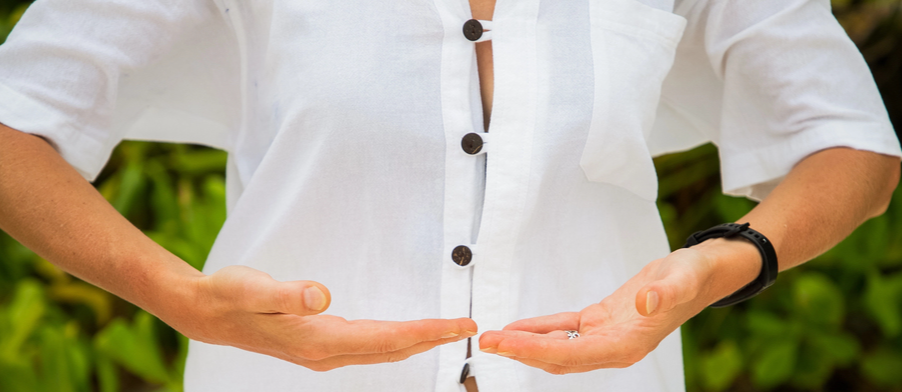
- Open and close the chest (60 seconds): Hands at chest level, palms facing, as if holding a beach ball. Inhale, gently widen the hands; exhale, let them glide back toward each other. Move within comfort; no stretching sensation needed.
- Swaying like a tree (60 seconds): Shift weight slightly right, then left, as if a breeze moves you. Hips and ribs follow. Let breath set the pace. Keep movements small if you are dizzy-prone.
- Gathering calm (60 seconds): Inhale and sweep hands out to the sides and up to shoulder height; exhale and draw hands toward the lower abdomen, palms facing in, as if collecting warmth at the belly.
- Neck clouds (60 seconds): Draw small, slow circles with your nose, half the size you think you need. Reverse direction. Keep breathing easy.
- Palm rub and face wash (60 seconds): Briskly rub palms until warm. With a gentle touch, sweep hands from the forehead down the cheeks and jaw, exhaling tension.
- Anchor and lengthen (60 seconds): Imagine a string lifting the crown of your head while your feet press down. Inhale to lengthen; exhale to settle.
- Close (60 seconds): Hands rest lightly over the lower abdomen. Breathe in for 4, out for 6, three to five cycles. Notice warmth, tingling, or steadiness.
If you have only three minutes, do steps 1, 6, and 10.
Building a Sustainable Habit
Consistency matters more than intensity. Short, regular practice trains the stress system to reset quickly. Start with just two minutes anchored to something you already do daily: after brushing your teeth, while coffee brews, or before opening email. Track how you feel before and after on a 0-10 scale for calm, mood, and tension. Keep movements comfortable; soreness the next day means you did too much. Five minutes of "gathering calm" at bedtime can shorten sleep onset. Plateaus are normal and mean the nervous system is adapting.
Tailor Your Practice to Your Symptoms
One size does not fit all. For anxiety and panic, emphasize longer exhales, belly warmth with hands over the abdomen, and slow swaying; keep eyes softly open and avoid big chest-opening movements if they feel exposing. For depression and low energy, add a little more range and rhythm with gentle arm circles and a slightly quicker tempo, and practice earlier in the day. For insomnia, keep evening practice quiet and breath-led, avoid energizing movements after dinner, and finish with hands over the belly and eyes closed. For ADHD and restlessness, use broader rhythmic movements first, such as swaying and floating arms, then narrow attention to breath in the final minute. For trauma-related symptoms, maintain contact with your environment by feeling the floor and noticing a color in the room, keep sessions shorter, and choose movements that feel empowering rather than vulnerable.
Myths and Realistic Expectations
Several common misconceptions are worth addressing directly. The first is that you must believe in energy to benefit; the mechanics of breath, movement, and attention work regardless of the language used to describe them. The second is that qigong replaces therapy or medication; it is an adjunct, and many people improve fastest when it is combined with therapy skills and, when indicated, medication. The third is that sessions need to be long or strenuous; five to ten minutes most days outperforms occasional long sessions. The fourth is that an absence of immediate calm means it did not work; some early benefits are subtle, such as warmer hands, slower breath, or softer shoulders, and mood shifts tend to follow. The fifth is that it is too late to start; people in their 70s and 80s often take to qigong quickly because it is gentle and forgiving.
Finding a Teacher and Good Instruction
Many people learn qigong from short videos and do well. Others prefer a teacher for accountability and feedback. Look for someone who teaches at a pace that respects your joints and breath, welcomes adaptations such as seated versions or smaller ranges, emphasizes safety and simple closing practices, and encourages you to stop any movement that causes pain or distress.
Red flags include pressure to ignore discomfort, promises of miracle cures, or discouragement of medical or psychological care.
Integrating Qigong into Treatment
Two to three minutes of breathing and slow movement at the start of a therapy appointment or medication check-in can quiet hyperarousal and improve insight. Between sessions, a daily 5-10 minute routine strengthens those results. Consider tracking outcomes every few weeks with simple tools like a mood rating, a worry log, or personal sleep notes, the same way medications are adjusted. If you are in psychotherapy, let your therapist know which movements help you stay grounded so they can be used during challenging work.
Frequently Asked Questions
How quickly will I notice a change? Most people feel something in the first session: warmer hands, deeper breaths, or a sense of "being here." Mood and sleep shifts often appear within two to four weeks of regular practice.
Do I need special clothing or equipment? No. Wear comfortable clothes you can move in. Supportive shoes are fine, especially if you practice outdoors or have balance concerns.
Can I practice if I'm in pain or have limited mobility? Yes, with modifications. Keep movements in a comfortable range, shorten sessions, or practice seated. If pain increases, back off and focus on breath-only practice until symptoms settle.
What if I get distracted? Distraction is normal. Each time you notice your attention drift, return to one anchor: the feeling of your feet, your hands moving through air, or your exhale. That return is the training.
Is there a best time of day? The best time is the time you will do it consistently. Many people find a brief morning routine sets the tone, and a shorter evening practice helps wind down.
Will qigong lower my blood pressure or help my heart? Gentle, regular practice can support cardiovascular health by reducing stress and improving activity levels. If you have heart disease or high blood pressure, practice within your medical plan and avoid straining or breath-holding.
Can children or older adults practice? Yes. Qigong scales well for all ages. Keep it playful and short for children; slower and smaller for older adults.
Start Gently, with Support
Qigong offers a practical way to settle the mind and support the body: no special gear, no long classes, no perfection required. Ten minutes a day over two to four weeks is enough for most people to notice steadier energy, clearer focus, and an easier relationship with stress. Healing Sky can connect you with a provider who pairs qigong guidance with personalized therapy and, when appropriate, medication to help build a more resilient nervous system.