Written by Healing Sky Editorial Team. Clinically reviewed by Raul Rodriguez M.D.
Most people who try sitting meditation expect to fail at it. They sit down, notice their mind is everywhere at once, and conclude they are doing it wrong. That is actually the practice working. Sitting meditation is not about achieving a blank mind; it is about noticing where attention goes and choosing, repeatedly, to bring it back. Anyone can do this, and the research behind it is substantial enough that psychiatrists now routinely recommend it alongside therapy and medication.
The Practice in Plain Language
At its heart, sitting meditation means choosing a neutral point of focus, most often the breath, and returning to it each time the mind wanders. Thoughts, feelings, and sensations still come and go; the goal is not to empty the mind but to notice experience with less struggle and more choice. Over time, this builds mental flexibility, emotional steadiness, and a kinder relationship with oneself. No special beliefs or equipment are required, only a few minutes, a stable seat, and a friendly curiosity about one's own experience.
The core sequence is simple: focus gently on an anchor such as the breath, notice when attention drifts, label that wandering lightly (for example, "thinking"), and return to the anchor without self-criticism. That cycle of noticing and returning is the repetition that builds the skill.
Why Sitting Meditation Supports Mental Health
Sitting meditation strengthens attention and reduces the "fight-or-flight" overdrive that fuels anxiety, irritability, and insomnia. It can soften depressive rumination and support recovery from stress, chronic pain, and substance use. Many people describe feeling more grounded, less reactive, and more able to choose a considered response instead of an automatic one. In therapy, meditation complements cognitive and behavioral strategies by increasing self-awareness and tolerance for difficult emotions, which is why clinicians increasingly integrate it into formal treatment plans.
The physiological mechanism is straightforward. When attention is refocused repeatedly, neural pathways involved in attention and emotion regulation are strengthened, a process sometimes called "top-down control." At the same time, slow, steady breathing signals safety to the body, nudging the parasympathetic nervous system to settle heart rate and muscle tension. The combination shifts the nervous system from chronic vigilance toward steadier presence. People often notice subtle but concrete changes: less startle response, easier breathing, and more room between a trigger and a reaction.
Preparing Your Space and Posture
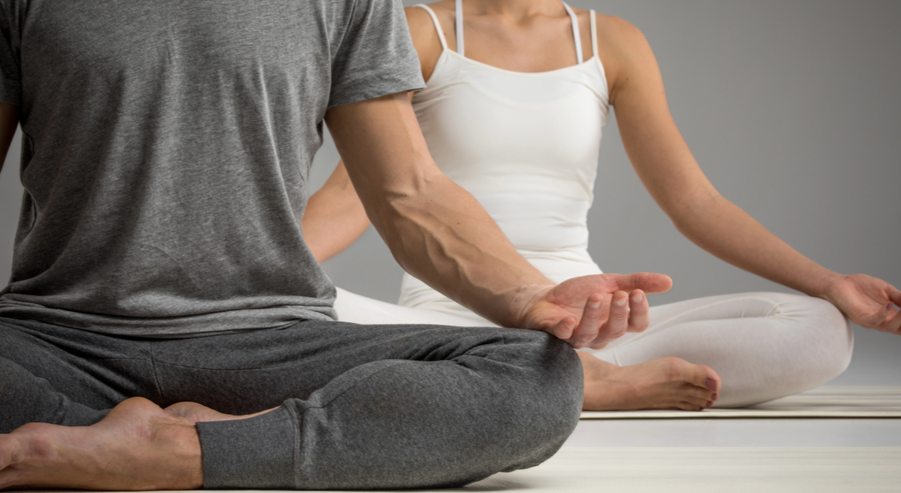
Setup should be comfortable, stable, and repeatable. A quiet corner, a parked car, or a closed office all work. Sit in a chair, on a cushion, or on a meditation bench with feet flat on the floor or legs comfortably crossed. The spine should be upright but not rigid, hands resting on the thighs or in the lap, jaw and shoulders softened. Eyes can be gently closed or half-open with a downward gaze. Setting a timer removes the temptation to watch the clock.
Posture modifications are not compromises. If back pain or limited mobility makes a classic seated position uncomfortable, adjustments are appropriate and encouraged:
- Chair: sit toward the front with feet flat; place a small cushion behind the low back.
- Cushion: if hips are tight, elevate the seat so knees fall below hip level.
- Kneeling bench: useful if the low back aches in cross-legged positions.
- Back support: meditating against a wall or in a firm-backed chair is fine; upright matters more than floor sitting.
- Eyes: an open gaze can reduce drowsiness or ease discomfort for people with trauma histories.
If pain builds past mild discomfort, adjust. Meditation is not a test of endurance.
A Simple 10-Minute Beginner Practice
Try this once a day for a week. If 10 minutes feels daunting, start with 3 to 5 minutes and add a minute every few days.
- Take your seat. Feel where your body meets the chair or cushion.
- Let the spine grow tall, shoulders easy, and hands rest naturally.
- Choose your anchor: the sensation of breathing at the nostrils or belly works well.
- Breathe normally. No need to control the breath, just feel it.
- When the mind wanders (it will), notice what pulled you: thought, sound, itch, or memory.
- Label it softly, "thinking," "hearing," or "planning," and return to the breath.
- If restlessness or sleepiness arises, try three slightly deeper breaths, then resume a natural rhythm.
- In the final minute, widen awareness to include the whole body and surrounding sounds.
- End by asking, "What quality do I want to carry into the next hour?" Take one easy breath and proceed.
Core Styles to Explore
Sitting meditation is a family of practices, and rotating among styles through the week keeps the practice fresh and addresses different needs.
Breath awareness settles attention at the nostrils or belly to feel each in-breath and out-breath. Counting breaths from 1 to 10, then restarting, builds concentration and steadies anxiety.
Open monitoring uses no single anchor. Instead, whatever is most vivid, whether sound, sensation, or thought, becomes the object of attention, like watching weather pass through the sky. This builds flexibility and reduces struggle with changing emotions.
Body scan (seated) moves attention slowly from head to toe, noticing temperature, pressure, or tingling without trying to change anything. This style grounds the practitioner in the present and supports chronic pain management.
Loving-kindness (metta) involves silently offering phrases of goodwill to oneself and others, such as "May I be safe. May I be healthy. May I be at ease." This strengthens self-compassion and can soften harsh inner criticism.
Noting names each distraction briefly, "worry," "remembering," "itching," then returns to the anchor. The label creates a small distance from the thought loop.
Common Obstacles and How to Work with Them
Everyone hits snags. Restlessness, sleepiness, and racing thoughts are not signs of failure; they are the material the practice works with. When restlessness arises, shortening the session, opening the eyes, or anchoring in sounds for a few minutes usually helps. Sleepiness responds to sitting a bit taller, cooler air, or shifting to a morning session. Racing thoughts become more manageable with a smaller anchor, such as the tip of the nose, combined with gentle counting.
Intrusive memories call for orienting to the room first, noticing the window, hearing the fan, and then returning to the breath. Physical pain is best met by widening awareness to include the whole body and adjusting posture without drama. Boredom is a cue to shift briefly to open monitoring, then return to breath. The most common worry, "Am I doing it right?", has a simple answer: if wandering was noticed and attention was returned, the practice worked. That is the repetition that builds the skill.
Safety: When to Modify or Seek Guidance
Meditation is generally safe, but nervous system history matters. People with active trauma symptoms, panic disorder, severe depression, mania, psychosis, or dissociation should work with a clinician who understands contemplative practices before beginning or deepening a sitting practice.
- Trauma triggers: keep eyes open, anchor in external sounds or touch (feet on floor), and use shorter, titrated sessions.
- Panic: pair breath awareness with paced breathing (slower exhale) or focus on contact points rather than chest sensations.
- Dissociation: prioritize grounding, naming five things seen, heard, or felt before and after practice.
- Mania or hypomania: favor shorter, structured sessions and strong behavioral routines; avoid late-night marathon sits.
- Psychosis history: use external anchors and practice with professional support.
- If suicidal thoughts arise or safety feels at risk, call or text 988 in the U.S., or contact local emergency services immediately.
How Much and How Often
Consistency beats intensity. Small, frequent sessions change the brain more effectively than rare, long sits. A minimum viable starting dose is about 5 minutes daily for two weeks, then 8 to 10 minutes. Ten to 20 minutes most days yields noticeable benefits for many people, and two 10 to 15-minute sessions, morning and evening, can help stabilize gains over time. Brief micro-practices, three mindful breaths before emails or meetings, keep the skill active between formal sits.
The most important variable is sustainability. If a day is missed, the next session is the starting point, with no penalty.
What Progress Looks Like
Progress in sitting meditation is quiet but real. In the first two weeks, practitioners typically notice mind-wandering sooner and may experience brief pockets of calm. By weeks three and four, refocusing becomes easier, reactivity to minor stressors decreases, and sleep onset improves for some people. By months two and three, mood tends to be more stable, recovery after upsets is faster, and self-compassion habits strengthen. Over the longer term, unhelpful patterns become recognizable earlier, and wiser responses become more available.
The goal is not constant calm. The goal is a steadier mind that can meet life as it is.
Bringing Mindfulness into Daily Life
Formal sitting builds the skill, but everyday applications make it useful when stress actually happens. The one-minute reset involves pausing, feeling the feet, exhaling slowly, and naming one thing that can be smelled or heard. The doorframe cue means relaxing the shoulders and taking a single mindful breath each time a doorway is passed. Before switching tasks, placing both feet down, breathing out, and deciding the next first step creates a brief but effective transition. During meals or walks, putting the phone away for the first three bites or the first block, and noticing pace, taste, and contact with the ground, extends the practice into ordinary moments. In difficult conversations, feeling the breath in the belly and slowing a reply by one second can change the outcome.
Tailoring the Practice for Common Concerns
Anxiety and worry: Try breath awareness with a slightly longer exhale, for example in for 4 counts and out for 6, for the first minute. If chest sensations feel alarming, anchor in the feeling of the feet or hands instead. End with one kind phrase directed at oneself.
Depression and low motivation: Morning sessions with a bright, upright posture and eyes slightly open tend to work better than evening sits. Adding loving-kindness at the end counters self-criticism. Keeping sessions brief but daily avoids overwhelm.
ADHD and distractibility: A tactile anchor, the feeling of fingers touching or breath at the nostrils, provides a concrete focus. Short, frequent sits of 3 to 7 minutes can be more effective than longer ones. Counting breaths adds structure.
Insomnia: Practice in the late afternoon or early evening rather than in bed. During nighttime awakenings, a gentle body scan while lying down can settle the nervous system without pressuring sleep.
Chronic pain: Invite sensations to be present without forcing them to change. Alternating 1 to 2 minutes of breath focus with 1 to 2 minutes of open monitoring reduces struggle. Adjusting posture as needed is therapeutic, not a shortcut.
Substance use recovery: Brief, frequent sessions strengthen pause-and-choose skills. When a craving arises, noting it ("craving"), feeling the feet firmly, taking three breaths, and choosing the next planned healthy action is a concrete sequence that works with the practice rather than around it.
Guided, Self-Guided, or Group Practice
All three formats can work; the right choice depends on learning style and support needs. Self-guided practice builds independence and fits any schedule with nothing more than a simple timer. Guided audio is helpful early on, providing structure and reassurance during difficult days. Group or class settings add accountability and a sense of community, and many people deepen their practice through shared silence and discussion. For people in psychotherapy, asking a clinician how to weave meditation into the treatment plan is worthwhile; a few minutes of mindful grounding at the start of sessions can improve focus and reduce avoidance.
A Week-by-Week Starter Plan
A gradual ramp balances effectiveness with sustainability:
- Week 1: 5 minutes daily, breath awareness; count 1 to 10, repeat.
- Week 2: 8 minutes daily; add one minute of open monitoring at the end.
- Week 3: 10 minutes daily; rotate body scan twice this week.
- Week 4: 12 to 15 minutes daily; add loving-kindness on two days.
Keeping brief notes on what helps and what hinders allows small adjustments that matter over time.
Common Myths
"I can't meditate because I think too much" is the most common objection, and it misunderstands the practice. Everyone thinks. The practice is noticing and returning, not stopping thought. The belief that real meditation is blissful is similarly mistaken; sometimes it is calm, sometimes it is messy, and both are practice. Ten minutes does seem short, but practiced most days it produces measurable changes. Adjusting posture during a session is not failure; doing so mindfully is part of the practice. Finally, meditation is a tool, not a replacement for treatment. It works best alongside therapy, lifestyle changes, and medication when those are indicated.
Start Today: a Five-Minute Sit You Can Do Anywhere
Set a timer for five minutes. Sit upright, feet on the floor. Place one palm on the belly and one on the thigh.
- Feel the next exhale all the way out. Let the shoulders drop.
- Notice the gentle rise and fall under the palm. That is the anchor.
- When a thought arrives, silently say "thinking." When a sound arrives, silently say "hearing." Return to the rise and fall.
- In the last minute, widen attention to include the whole body. Let the breath breathe itself.
- Ask, "What is one small, kind action I can take next?" Then do that.
Healing Sky can connect you with a provider who integrates sitting meditation into personalized treatment plans for anxiety, depression, trauma recovery, ADHD, insomnia, and stress-related health concerns.