Written by Healing Sky Editorial Team. Clinically reviewed by Raul Rodriguez M.D.
Transcranial magnetic stimulation (TMS) is a noninvasive, outpatient treatment that uses brief magnetic pulses to stimulate specific brain circuits involved in mood, anxiety, and compulsive behaviors. For many people who have not improved with medication or cannot tolerate side effects, TMS offers a safe, effective path forward. Unlike electroconvulsive therapy (ECT), TMS does not require anesthesia, does not intentionally induce a seizure as part of treatment, and patients can usually drive themselves home afterward.
How TMS Works
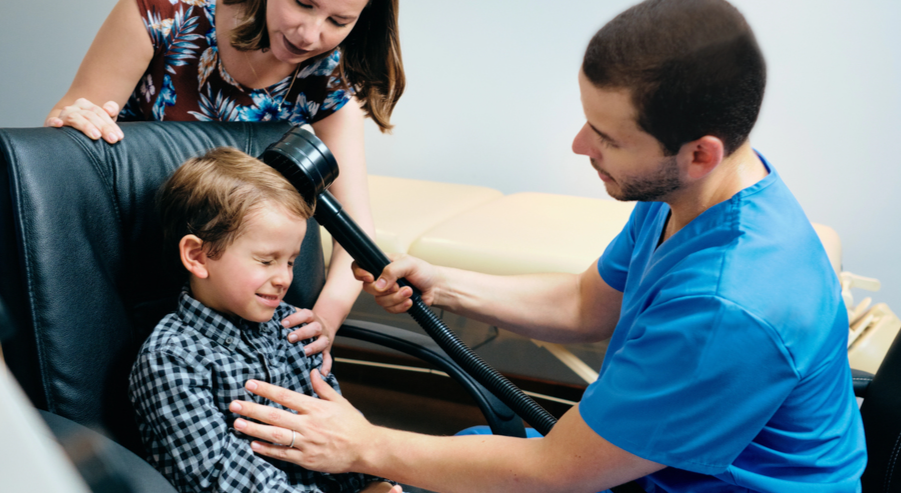
During TMS, a treatment coil rests against the scalp, usually over the left or right forehead area, while a magnetic field turns on and off rapidly. This creates tiny electrical currents in the outer layers of the cortex that regulate mood and attention. The patient is awake the whole time, able to read, watch videos, or chat with the technician. Most people describe the sensation as a tapping on the scalp with a clicking sound from the magnet. Modern protocols typically run 3 to 20 minutes per session; older ones run 20 to 40 minutes. Treatment is usually five days a week for about 4 to 6 weeks, sometimes followed by a brief taper.
What Conditions TMS Treats
In the United States, the Food and Drug Administration (FDA) has cleared TMS and specific TMS devices for several conditions:
- Major depressive disorder (MDD) in adults who have not improved with prior antidepressants; first cleared in 2008. The FDA later allowed marketing of TMS for OCD and referenced the 2008 depression clearance in its announcement. (accessdata.fda.gov)
- Obsessive-compulsive disorder (OCD) in adults, using a "deep" TMS coil that targets networks linked to compulsions. (fda.gov)
- Aid to short-term smoking cessation in adults, using a specialized deep TMS coil. (brainsway.com)
- Decreasing anxiety symptoms in adults with MDD (often called "anxious depression") for certain systems. (ir.neuronetics.com)
- MDD in adolescents ages 15 to 21, as an adjunct to medication, for certain systems. (ir.neuronetics.com)
- Acute treatment of migraine, via a single-pulse TMS device type (sTMS), a different form from psychiatry's repetitive TMS (rTMS). (accessdata.fda.gov)
Clinicians also use TMS off-label for other conditions when evidence supports it, but insurance coverage is typically tied to FDA-cleared indications.
How TMS Works in the Brain
Mood, motivation, and cognitive control rely on distributed networks. In depression, the left dorsolateral prefrontal cortex (DLPFC) often underperforms, and its connections with deeper areas become dysregulated. TMS applies patterned magnetic pulses to nudge these circuits back toward healthy activity. Over daily sessions, this repeated stimulation promotes synaptic plasticity, helping the network relearn more adaptive firing patterns. That is why benefits tend to build across weeks rather than appearing immediately.
The direction of stimulation matters. Left-sided excitatory stimulation (for example, 10 Hz or intermittent theta burst) strengthens underactive mood circuits, while right-sided inhibitory stimulation (for example, 1 Hz) can calm overactive networks linked to anxiety and rumination. Bilateral and deep approaches engage wider or deeper targets when clinically appropriate.
Types of TMS and Why They Matter
All TMS devices deliver magnetic pulses, but coil designs and protocols differ in how they shape the field and the dose delivered to brain networks. Standard figure-8 coils focus stimulation near the surface, with common protocols including 10 Hz left-DLPFC and 1 Hz right-DLPFC. Deep TMS uses specialized H-coils that engage deeper and broader networks; certain H-coils are FDA-cleared for MDD, OCD, and smoking cessation. (fda.gov)
Intermittent theta burst stimulation (iTBS) delivers high-efficiency pulses in bursts and was cleared in 2018 for depression. It achieves outcomes comparable to traditional 10 Hz in a fraction of the time, often around three minutes per session. (medscape.com) Accelerated schedules, multiple sessions per day over several days, are also emerging. A double-blind randomized trial of the Stanford Neuromodulation Therapy (SNT/SAINT) approach showed greater symptom reduction than sham in treatment-resistant depression, though access and coverage are still evolving. (pubmed.ncbi.nlm.nih.gov) A psychiatrist will match the protocol to the patient's symptoms, history, and goals, and can adjust mid-course based on response.
What a Typical TMS Course Looks Like
The first visit includes a safety screen and a brief mapping procedure to find the individual motor threshold, the minimum power that makes the thumb twitch. That measurement serves as a personalized dosing reference so treatment is strong enough to be therapeutic while remaining safe and tolerable. From visit two onward, daily treatments run Monday through Friday. An optional taper of a few additional sessions may follow to consolidate gains, and symptom scores are tracked weekly to guide the plan.
Most people start to notice changes, better energy, more motivation, fewer intrusive thoughts, within 10 to 15 sessions. Others respond later, which is why completing the full course matters.
Effectiveness: What Results to Expect
In well-designed trials and real-world practice, about 40 to 50% of adults with treatment-resistant depression achieve a response (symptoms cut in half), and about 25 to 30% reach full remission after an acute TMS course. These are solid outcomes in a population that has already struggled with medications. (pubmed.ncbi.nlm.nih.gov)
Durability varies. Many patients maintain benefits for months; some need occasional booster sessions if symptoms return. OCD response usually develops more gradually and may continue to improve for several weeks after the acute course ends, particularly when combined with exposure-based therapy.
Safety and Side Effects
TMS is generally very well tolerated. The most common side effects are mild scalp discomfort or headache during the first few sessions and temporary facial muscle twitching while the magnet is on. Hearing protection is provided at every session. There is no evidence that standard TMS harms memory or cognition; many patients report clearer thinking as depression lifts.
Serious risks are rare. Seizure is exceedingly uncommon when safety guidelines are followed, survey estimates suggest fewer than 1 seizure per 60,000 sessions in people without seizure risk factors, and meta-analytic and registry estimates are generally well under 1%; risk factors are screened for and protocols adjusted accordingly. (pubmed.ncbi.nlm.nih.gov) Hearing changes are minimized with consistent earplug use. Mood elevation (hypomania or mania) is rare; screening for bipolar disorder and coordinating mood stabilizers when needed reduces this risk further. (pmc.ncbi.nlm.nih.gov)
Who Is a Suitable Candidate
Adults with major depressive disorder who have not improved enough with one or more antidepressants, or who have had unacceptable side effects, are the most established candidates. TMS is also appropriate for adults with OCD that has not responded to therapy and medication (using deep TMS protocols), and for adults seeking a non-drug aid to smoking cessation with specific deep TMS systems. Patients who prefer a non-medication option or want to reduce reliance on medications over time may also be good candidates. Adolescents ages 15 to 21 with MDD can be considered for TMS as an adjunct to medication when the specific clearance applies to the system used. Coverage varies by insurer and indication.
Who Should Not Get TMS
TMS is contraindicated for patients with certain metal or electronic implants in or near the head, for example, aneurysm clips, cochlear implants, deep brain or vagus nerve stimulators, or other ferromagnetic or electromagnetic devices. A common rule of thumb is to avoid implants within about 30 cm (12 inches) of the coil. (nimh.nih.gov)
A history of seizures or conditions and medications that markedly lower seizure threshold also warrants careful evaluation, as does unstable medical or neurological illness. Pregnancy is not an absolute contraindication, but data remain more limited and risk-benefit discussions are individualized. Most dental work, fillings and crowns, is nonmagnetic and safe, though each case is still assessed individually.
How TMS Compares with Other Options
Antidepressants remain first-line for many patients. TMS is particularly helpful when medication trials have fallen short or caused side effects, and for patients who respond, it works without systemic drug exposure. Combining TMS with an evidence-based therapy, especially behavioral activation, CBT, or exposure and response prevention for OCD, often improves and prolongs results.
Esketamine (SPRAVATO) is another effective option for treatment-resistant depression, delivered in clinic with monitoring; some patients try both at different times, and decisions are individualized. ECT remains the standard for certain urgent or severe cases such as psychotic depression or life-threatening weight loss. TMS is less disruptive to memory and daily logistics and carries a different risk-benefit profile. Both can be appropriate when matched to the right patient.
Expected Timeline and Durability
During weeks 1 to 2, many patients notice subtle improvements, sleep or energy stabilizes, or motivation begins to return. By weeks 3 to 4, gains typically broaden: better concentration, fewer negative thought loops, more ease getting through the day. Weeks 5 to 6 are when response or remission tends to consolidate. In the months that follow, some patients remain well without further intervention; others benefit from occasional booster sessions if symptoms reemerge. Relapse-prevention planning typically includes ongoing therapy, exercise, sleep routines, light exposure, and collaborative medication decisions.
Insurance, Access, and Costs
Most U.S. insurers, including Medicare, cover TMS for adult MDD when standard criteria are met: documentation of prior medication and therapy attempts, structured symptom scales, and a qualified TMS provider. Coverage for OCD, adolescent MDD, and smoking cessation varies by plan and by device clearance. Out-of-pocket packages exist for patients who do not meet coverage rules or prefer to start sooner. It is worth asking about financing options and whether accelerated or theta-burst protocols are covered under a specific plan.
Questions to Ask a TMS Provider
- Which TMS system and protocol do you use for cases like mine, and why?
- How long are your sessions, and how many are typical in a full course?
- What are your clinic's response and remission rates for my condition?
- How will we track progress and adjust if I don't improve by week 3 to 4?
- Do you offer booster sessions or maintenance plans?
- What safety steps do you take if I have a seizure risk factor?
- Will my insurance cover this indication and protocol?
Getting Started with TMS Through Healing Sky
Healing Sky connects patients with qualified and experienced TMS providers in their area. Every TMS plan a matched provider offers begins with a thorough psychiatric evaluation, a careful safety screen, and a personalized treatment roadmap. Providers review prior treatments, set realistic goals, and select the protocol most likely to help, whether that is standard left-sided stimulation, right-sided options for prominent anxiety, a deep TMS coil for OCD or smoking cessation, or a time-efficient iTBS schedule. Symptom scores are monitored weekly, side effects are checked at each visit, and coordination with a therapist or prescriber is part of the process.
If depression, OCD, or nicotine dependence has not responded to medication and therapy, TMS offers a different approach grounded in brain-circuit science and delivered in a routine outpatient setting. Reach out to schedule a TMS evaluation with one of the qualified providers listed on the Healing Sky directory.
Note on regulatory status and safety: Key FDA clearances include depression (2008), OCD (2018), smoking cessation (2020), anxious depression labeling for certain systems (2022), and adolescent MDD adjunct use for certain systems (2024); single-pulse devices exist for migraine. TMS is generally well tolerated; seizures are rare when guidelines are followed. For details, see FDA communications, NIMH safety summaries, and peer-reviewed reviews. (fda.gov)