Yoga is a holistic system developed thousands of years ago in India to understand the mind, body, and human experience. While modern yoga often focuses on movement, the original teachings describe yoga as a path of awareness, regulation, and integration.
Foundational Texts
The Upanishads — philosophical teachings about consciousness.
The Bhagavad Gita — yoga as purposeful action and devotion.
The Yoga Sutras of Patanjali — a practical guide to understanding the mind.
Yoga as Regulation, Liberation, and Integration
Regulation — Practices that help calm and balance the nervous system.
Liberation — Awareness that frees us from automatic patterns and reactions.
Integration — Alignment between body, emotions, thoughts, and meaning.
Understanding the Nervous System
Yoga practices influence the nervous system, helping the body shift between states of activation and restoration.
Two Primary Nervous System Modes
Sympathetic — the fight or flight response (activation).
Parasympathetic — the rest and restore response (recovery).
Breathing, movement, and awareness practices can help the nervous system return to balance.
How Yoga Helps Regulation
Slows breathing and heart rate
Increases body awareness (interoception)
Releases muscular tension
Supports emotional processing
Builds resilience to stress
The Five Koshas: Layers of the Self
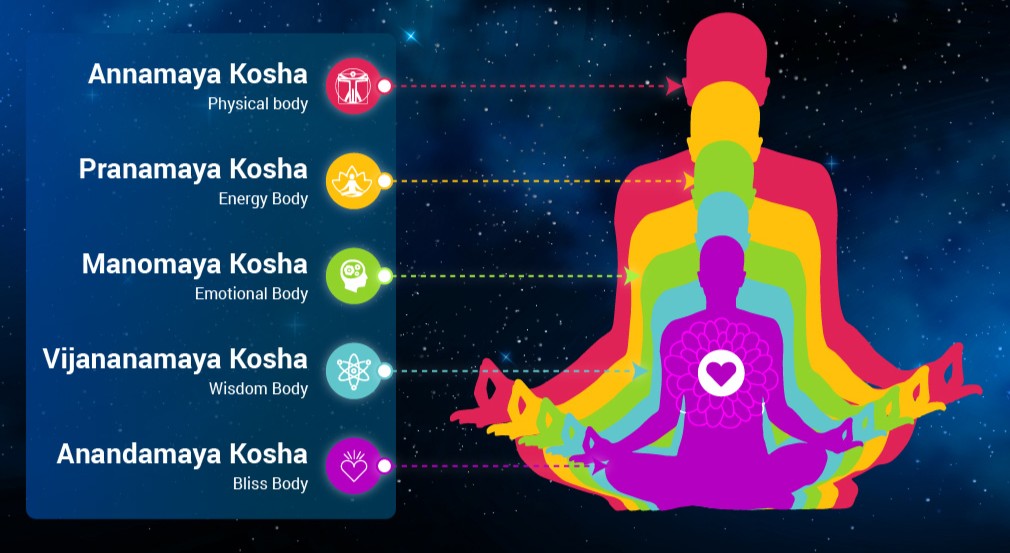
In yoga philosophy, the human experience is described as five interconnected layers called Koshas. They represent physical, energetic, emotional, mental, and spiritual aspects of our being.
The koshas are the facets or levels of human being. They form a road map for the journey of self-discovery. This map of being comes from an ancient spiritual science called Vedanta, and is extremely useful in understanding how Yoga postures work, in the context of gaining self-knowledge. The following description outlines the area of activity of each kosha, its relationship to health, and how Yoga postures help to create balance in each.
Think of these layers like nested fields of experience. Changes in one layer influence the others.
Annamaya Kosha – The Physical Body
The Annamaya Kosha is the physical body—the layer made of muscles, bones, organs, tissues, and skin. In yoga, this layer is nourished through movement, rest, hydration, and food. When we practice yoga postures, stretching, or mindful body awareness, we are working with this layer. Trauma-informed yoga invites students to gently reconnect with their physical body at their own pace, noticing sensations without judgment. Developing awareness here can help people feel more grounded, safe, and present in their bodies.
Pranamaya Kosha – The Energy Body
The Pranamaya Kosha is the energetic layer of the body, connected to the breath and the flow of life force energy, known as prana. This energy moves through subtle channels and is influenced by breathing, posture, and emotional state. Practices such as breath awareness, gentle movement, and relaxation help regulate this layer. When the breath becomes steady and smooth, the nervous system often begins to settle as well. Working with the breath can support balance between activation and calm.
Manomaya Kosha – The Emotional & Mental Body
The Manomaya Kosha includes our thoughts, emotions, and sensory experiences. It is the layer where the mind interprets what is happening inside and around us. Stress, memories, and emotional patterns often live here. Trauma-informed practices encourage observing thoughts and feelings with curiosity rather than judgment. By cultivating awareness of this layer, students can begin to recognize patterns, create space between stimulus and reaction, and develop greater emotional regulation.
Vijnanamaya Kosha – The Wisdom Body
The Vijnanamaya Kosha is the layer of insight, intuition, and inner wisdom. It is the part of us that can witness our thoughts and emotions rather than being completely controlled by them. This layer is connected to discernment, self-reflection, and personal understanding. Practices such as meditation, contemplation, and mindful awareness help strengthen this capacity. When this layer becomes more active, people often feel a deeper sense of clarity, self-trust, and alignment with their values.
Anandamaya Kosha – The Bliss Body
The Anandamaya Kosha is the deepest and most subtle layer of being. It is associated with a sense of peace, connection, and wholeness that can arise when the other layers are balanced. This experience is not about constant happiness, but about touching moments of deep presence and inner ease. Practices like meditation, deep relaxation, yoga nidra, and mindful stillness can help people access this layer. Even brief moments of calm and connection can support healing and remind us of our inherent sense of wholeness.
Registered trauma-informed Yoga Teacher and Certified Integrative Nutrition Health Coach serving mental health, rehabilitation, and senior communities since 2013. I specialize in accessible movement—from yoga and fascia flossing to NeuroFitness and Yoga Nidra/NSDR for nervous system regulation. My approach blends education, empowerment, and practical tools to help you feel safe, strong, and at home in your body.