


Eros Vocabulary, What Does It All Mean!?
Here, we will review some of the vocabulary necessary for the realm of sensuality to ensure we are all on the same page. This includes the correct names for body parts, how the body works during sexual activity, and common sexual health concerns. Understanding these terms helps people communicate clearly with partners and healthcare providers, ask questions, make informed decisions, and better understand information about their sexual health. Having a shared vocabulary also helps reduce confusion, embarrassment, and misinformation, making it easier to have respectful and honest conversations about sexuality.
Transcript
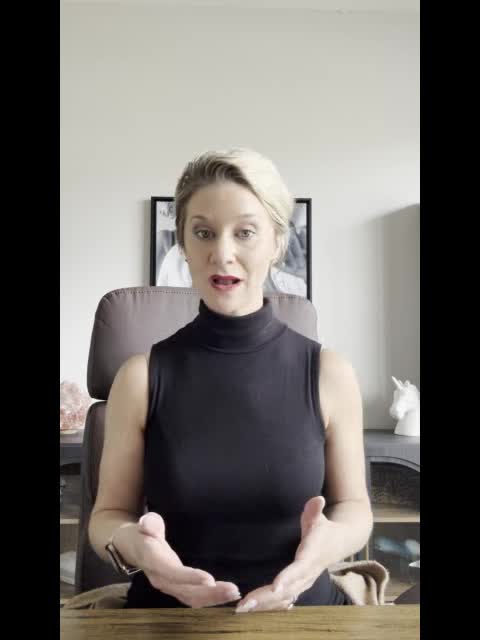
0:00All right, so welcome back to our next segment in erotic rediscovery of self.
0:10Today in EROS, we're going to talk a little bit more about vocabulary.
0:14So why is this important?
0:17Well, mainly because we need to make sure that we have a foundational understanding
0:23and a similar understanding of what we're actually talking about and what we mean.
0:28A lot of what happens in the communication in the realm of sex and sensuality is that
0:35people have a misunderstanding of terms and that they're not actually using them correctly.
0:42So some of them will be broadly how or what people mean when they say things like sex,
0:50because as we know in the sex therapy community, that means a lot of different things to different
0:56people, depending on who you are talking to.
0:58So for this particular course, when we say sex, what we're actually meaning is what most
1:07people refer to sex as some sort of penetrative activity typically between male and female,
1:13but it can be between any penetrating partner and receiving partner.
1:18So keep in mind that that's not necessarily what other people might mean, and it could
1:24be a good opportunity, particularly if you're negotiating with a partner, to ask them what
1:28they actually mean by that.
1:30Now, it's not only important in the conversation while we're learning, but it's also important
1:37when we talk about this with our children or with children in general.
1:43Why?
1:44Well, because they need to know what it means.
1:46They also need to have the appropriate vocabulary.
1:49If something were to happen to them and they're trying to more adequately explain something
1:55that's going on.
1:56So that's how we're going to refer or what we mean by sex in this particular course.
2:03The other thing that's important is to talk about vocabulary that typically may not be
2:12used in just our general day-to-day language, things like paraphilias.
2:18So what is a paraphilia?
2:20It's a pattern defined, a reoccurring sexually arousing material or imagery and behavior
2:28that involves unusual or especially socially unacceptable sexual practices.
2:34That's defined by Merriam-Webster.
2:36So what does that actually mean?
2:38A lot of these definitions include other things that you kind of get set on this breadcrumb
2:43trail.
2:44So what's a socially acceptable or unacceptable practice?
2:48Well, if you look things up just in general on the internet, it talks a lot about culture.
2:55It talks a lot about family value systems, about socialization, and a lot about privacy.
3:05And what does that mean?
3:07So privacy is typically derived from purity culture, meaning we don't talk about it.
3:14We don't share it.
3:15We don't look at it.
3:16We don't do it in a place where people could look at it.
3:21And those are types of things that I think that today, especially, we are challenging.
3:26And as we've talked about with Masters and Johnson and Alfred Kinvey already, that they
3:31actually did challenge as well.
3:33So there are certain things that we wouldn't necessarily, although maybe they are considered
3:40a paraphilia.
3:41We wouldn't necessarily look at them the same way that they did in the late or early late
3:50studies of Alfred Kinsey and Masters and Johnson.
3:54However, there are some things that we would, right?
3:58So other socially unacceptable or societally unacceptable sexual practices, you can probably
4:05think of some.
4:07Things like consent, things like age-related consent, and what is the appropriate age.
4:15Things like privacy, depending on where something were to occur, and a lot of this is coming
4:22up today in terms of self-expression as well.
4:26So things to consider, and also things to review yourself, just to internally kind of
4:32have that dialogue and see where do your belief systems fall.
4:36It's not, this course is not to challenge good, bad, right, or wrong, or get you to
4:41change your belief systems, but hopefully be able to look more broadly at your sensual
4:48self and your sexual expression and to see who you are really, and how can we bring that
4:55forward in terms of who you are, confidence, self-esteem, and all of that.
5:02When we talk about gender identity, gender identity is a person's internal sense of being
5:10male or female, or some combination of the two, or neither.
5:14So identity is how somebody identifies themselves.
5:21Sexual orientation is a person's sexual identity or self-identification of whom they are attracted
5:31to.
5:33So this would be, sexual orientation would be what we defined with the Kinsey scale.
5:39So bisexual, straight, homosexual, pansexual, there are so, so many.
5:45So there is a handout completed that with some of these definitions of how people might
5:52identify, if that's something you want to look into more, that's something that you
5:56know, you are curious about.
5:58But for our intents and purposes in this course, we are going to define sexual orientation
6:04with who somebody identifies as they are attracted to.
6:12Sexuality and sensuality are often used interchangeably, but they are not necessarily the same thing.
6:21So sexuality is defined more as a state or quality of being sexual, sexual acts, things
6:29that include sexual activity and reproduction, whereas sensuality is typically defined as
6:36the gratification of your senses.
6:39So remember, we have five senses, and usually sensuality is the gratification or indulgence
6:50or our appetite around more fleshly based desires, but it's a focus on the body rather
6:59than on the mind, rather than on any kind of undertones that might happen in the realm
7:09of sexuality when we are talking about it from a cultural standpoint.
7:14So for this course, we are going to talk about sensuality is really the way that we
7:19express ourselves through our body, whether that relates to some sort of sexual activity
7:25or not.
7:28We are also going to talk a lot in this course about sexual assault and masculinity.
7:38And those two things are important because they are typically not discussed, and we will
7:44learn a little bit more about that later on, but it has really created a gap, particularly
7:51with men, of being able to feel more comfortable coming forward if something like that has
7:57happened to them, but also has historically been that people have less severe consequences
8:07when they are in a situation where they've been accused of sexual assault with a male
8:14versus a female, and that's really unfortunate.
8:17It wasn't until 1994 that a lot of those definitions and laws actually changed to include everybody.
8:26And so we'll talk more about that.
8:27But sexual assault, the way that we are defining it now, is the World Health Organization's
8:33definition, which is all-inclusive, or the most all-inclusive one that I could find in
8:38the literature.
8:40And so their definition is, any sexual act, attempt to obtain a sexual act, unwanted sexual
8:48comments or advances, or acts to traffic or otherwise direct against a person's sexuality
8:57using coercion by any person, regardless of their relationship with the victim, in
9:04any setting, but not limited only to home or to work.
9:10So you can see how that definition broadened how we look at sexual assault, who essentially
9:18could be somebody that is a perpetrator of sexual assault, but also who it can happen
9:23to.
9:26Masculinity has oftentimes been associated with toxicity or unhealthy patterns of male
9:34behavior.
9:35So for our purposes, we are redefining and really taking a look at what masculinity actually
9:41is because there are healthy masculine, healthy masculine women, healthy masculine men, and
9:49masculinity itself is not necessarily a bad thing.
9:53So the quality or nature of the male sex or quality or state, degree of being masculine.
10:00masculine or manly. Now that's a really vague definition. So a lot of the definitions that
10:08you look up about masculinity or femininity in the literature are very circular. They're
10:15very vague and they kind of just use the same phrasing over and over again. And so our exploration
10:24through this course is really going to be creating a healthy definition of masculinity
10:28and helping folks be able to embrace that side of themselves in its full expression
10:35and being able to challenge some of those social norms that have typically been associated
10:42with that. The last definition that we're going to talk about, at least for the beginning
10:49of this course, are traditional versus comprehensive sexual education programs. Now we're going
10:56to talk more about that in a little bit, but the main difference between traditional
11:01and comprehensive may also be looked at as the difference between old school, new school
11:10waves of thought or more progressive ways of thinking about sexual education courses.
11:17Essentially the main difference that I found in the literature was that traditional sexual
11:23education courses are more geared or more heavily geared toward purity culture, toward
11:30abstinence and reproduction almost exclusively. And if you ask anybody that's older than you,
11:40that you have a relationship with, they're probably going to tell you very similar stories
11:45about what their sexual education journey was like through school if they had one. Comprehensive
11:53sexual education is still a pretty new term. It's still pretty, you know, new wave thinking,
12:00which is essentially that abstinence only doesn't necessarily work. And we've seen that
12:09over and over again. If you think about things like the D.A.R.E. program and Scared Straight
12:15and all of these things that were really heavily abstinence based and more fear mongering,
12:21they don't really work. What we know in the realm of young people is also that things that are made
12:30to be taboo in that you shouldn't be doing them are inherently more exciting to them. So there
12:37may have been actually some adversive reactions to a lot of these and those are things that they're
12:44finding as they're doing retrospective studies on this. So comprehensive sexual education is
12:51more based in essentially the reality that young people are going to engage in certain types of
12:58activity. So while abstinence or while risk prevention is still a very big part of those
13:04school curriculums, the other commonality is heavily based around consent and mutual or shared
13:14decision making about sexual activity and sexual engagement. And so they're still
13:22a little bit more, let's say, advanced in the thinking in terms of taking into consideration
13:28what people have been and kind of have always been engaging in at those ages. But it's still
13:35a really vague term. It's still not generalizable. So in the next section, we are going to talk
13:43more intensively about traditional and comprehensive sexual education programs,
13:49as well as some of the takeaways from those. Do they work? So stick around to go through the
13:57history of sexual education and why those things may or may not apply to you today if you are past
14:05college.
Related videos


Join Healing Sky
Sign up now to get unrestricted access to Healing Sky's online mental health directory, resources, and more!
Sign up now
 N/A



Share this video
Send this video to someone who might find it helpful.