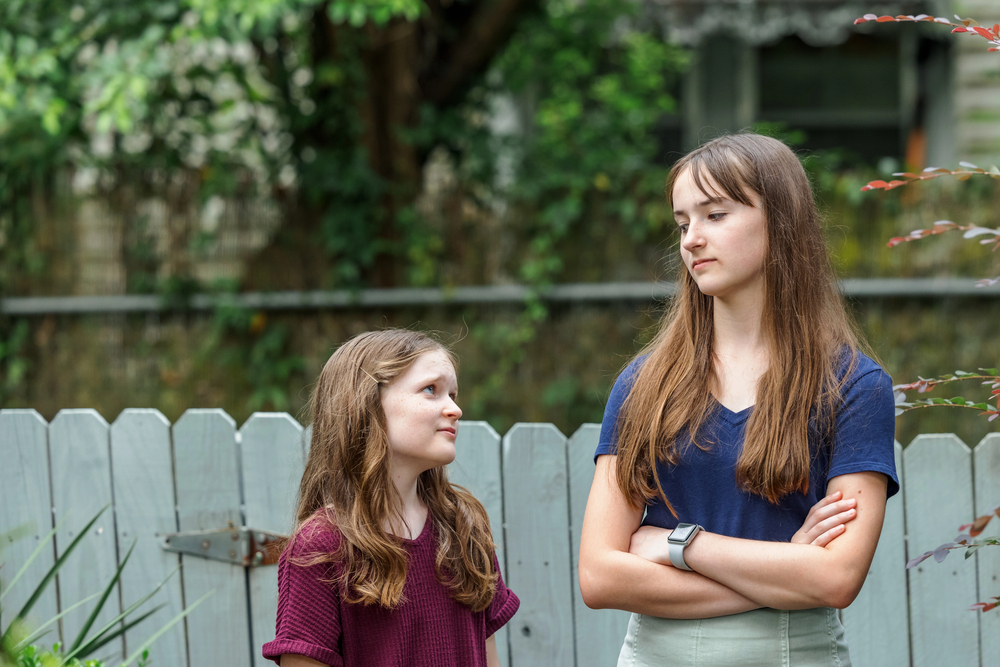
Understanding how siblings are affected when one child is struggling is one of the harder parts of parenting through a family mental health crisis. When a child is in pain, whether from anxiety, depression, behavioral challenges, or something else entirely, parents naturally pour their energy toward that child. The other kids in the house watch all of this happen, absorb the tension, and rarely say a word about what they are feeling. What I have seen, time and again, is that the siblings who seem fine are often carrying just as much as the child who is visibly struggling. This article walks through what those children are actually experiencing and what you can do about it.
The 'Glass Child': Why Siblings of Struggling Kids Often Go Unnoticed
The term "glass child" was introduced to describe children who become so transparent in their own family that adults look right through them to focus on the sibling with greater needs. This is not a failure of parenting. It is a predictable outcome when a family is under sustained stress and one child's needs visibly dominate the household. Parents are doing what feels necessary, and the child who appears to be managing fine gets less of their attention not out of indifference, but out of triage. The problem is that the glass child learns to stay quiet, perform competence, and meet expectations without anyone checking whether they are actually okay underneath all of that.
These children often become exceptionally self-sufficient at a young age, not because they are thriving, but because they have learned that asking for help adds to the family's burden. They may excel in school, take on caregiving roles at home, or present as unusually mature. From the outside, they look like the easy one. From the inside, they are frequently lonely, confused, and frightened about their sibling's condition. The cost of staying invisible shows up later, sometimes in adolescence or early adulthood, when the emotional weight they carried quietly finally becomes too heavy to manage alone.
If you are a parent reading this, the fact that you are here already tells me you sense something worth paying attention to. Recognizing that your other children exist inside this story, not just beside it, is the first real step toward helping them. You can read more about the warning signs that stress in a child's life is becoming something that warrants attention in our piece on when stress becomes something more.
Common Feelings Siblings Carry: Guilt, Worry, and Resentment
Siblings of kids with mental health issues carry a complicated emotional load that most of them have no language for. Guilt is one of the most common feelings, and it often makes no logical sense from the outside. A sibling might feel guilty for being healthy, for having a good day, for laughing too loudly, or for wishing things were different. That guilt can become internalized as a belief that their own happiness is somehow unfair or even harmful to the brother or sister who is suffering.
Worry is the other constant companion. Children are perceptive, and when a sibling's mental health struggles are serious, they absorb the fear in the household even when adults try to shield them from it. A younger sibling might not have the words to describe what they are anxious about, but their body will tell the story through sleep disruption, stomach aches, or clinginess. An older sibling might understand enough of the situation to carry a disproportionate sense of responsibility for keeping the peace or monitoring their brother or sister.
Sibling guilt and resentment often exist side by side, and that combination is particularly hard for children to process. Resentment is natural when a child repeatedly loses out on parental attention, family activities, or emotional space because of a sibling's crisis. But because children also love their sibling, feeling resentful tends to produce shame, which then cycles back into guilt. Without an adult who can name this openly and without judgment, children are left managing a feedback loop they did not create and do not know how to exit.
How Family Roles Shift When One Child Needs More Attention
Family systems are adaptive by nature, and when one member is in crisis, the others reorganize around that crisis without anyone making a conscious decision to do so. A sibling might move into the role of the family peacekeeper, working to reduce conflict and keep the emotional temperature down. Another might become the family comedian, using humor to provide relief from tension. Others step into a parenting role with their struggling sibling, offering care and oversight that was never their responsibility to carry.
These role shifts feel helpful in the short term because they reduce visible friction and give everyone a defined function. The difficulty is that the child filling the role loses something in the process. The peacekeeper stops having their own emotional reactions. The comedian can not grieve. The caretaker becomes responsible for something no child should be responsible for. What starts as adaptation becomes a fixed identity, and the sibling begins to understand themselves through that role rather than through their own needs and interests.
Understanding how your family's dynamics have reorganized is genuinely useful information, and it often becomes clearer in a family therapy setting where a professional can reflect back what they are observing. Our article on family programming in treatment covers how structured family work can help the whole unit, not just the child who is formally in treatment.
Signs a Sibling Is Quietly Struggling Too
Because glass children work hard to stay off the radar, the signs that they are struggling tend to be subtle and easy to rationalize away. A drop in grades might get attributed to a busy season at school. Increased irritability might be chalked up to adolescence. Withdrawal from friends or activities that once mattered to them often goes unnoticed in a household where everyone is focused elsewhere. The common thread is change from baseline, something is different from how this child used to function, and it has persisted for long enough that it is worth a real conversation.
Physical complaints without a clear medical cause are a frequent signal in younger children. Headaches before school, recurring stomach aches, and disrupted sleep can all be a child's body expressing what their words have not found yet. In older children and teens, look for increased time alone, a shift toward or away from screens and social media, changes in eating, or a sudden flatness in affect where a child who used to be expressive becomes difficult to read. None of these signs in isolation is conclusive, but together they form a picture worth taking seriously.
It is also worth paying attention to what a sibling says about the struggling child. Persistent anger, minimizing their sibling's experience, or, at the opposite end, expressing extreme fear or catastrophizing about their sibling's condition can all reflect emotional overwhelm that is not being processed anywhere healthy. Our guide on recognizing PTSD symptoms in children may be useful if a sibling has witnessed frightening events related to a brother or sister's mental health crisis.
How to Talk to Siblings About a Brother or Sister's Mental Health
Most parents avoid these conversations because they do not know what to say, and they worry that saying the wrong thing will make things worse. What I want you to know is that silence does more damage than an imperfect conversation. Children fill the gaps with their imagination, and what they imagine is almost always scarier and more distorted than the truth. An age-appropriate, honest explanation gives a sibling permission to understand what is happening and, more importantly, permission to have their own feelings about it.
Start by finding a calm, private moment and naming what the sibling has probably already noticed. Something like, "I know things have felt different at home lately, and I want to talk about that with you" opens the door without catastrophizing. Use accurate but accessible language, and avoid minimizing or over-explaining. The goal is not to provide a clinical briefing but to make the child feel included in the family's reality rather than protected from it in a way that actually increases anxiety. Ask what questions they have and follow their lead rather than delivering a monologue.
Reassure the sibling about what is not going to change, including how much they are loved, that the struggling child's situation is not their fault, and that there are adults handling the hard parts. Then keep the conversation open over time. One talk is not enough. Check in regularly, notice when something seems to be on their mind, and make it clear that there is no wrong way to feel about what is happening in your family.
Supporting Your Other Children Without Shortchanging the One Who's Struggling
The fear most parents carry is that attending to their other children means withdrawing from the child who is most in need. In practice, the two things are not in competition. A family where siblings are genuinely supported is a healthier environment for the struggling child to recover in. When siblings are resentful, fearful, or quietly falling apart, the emotional climate of the home becomes harder for everyone, including the child in treatment.
Protecting protected time with each sibling, individually, is one of the most concrete things you can do. It does not have to be elaborate. A walk, a meal together, or even a fifteen-minute check-in at bedtime communicates that this child exists to you outside of the crisis context. It also gives them a regular, low-pressure opportunity to share what they are carrying without having to ask for it. Children are far more likely to open up during a side-by-side activity than in a face-to-face conversation that feels like an interview.
If you are also managing your own exhaustion while supporting a child in treatment, it is worth reading our piece on supporting someone in treatment without burning out, because your capacity to show up for your other children is directly tied to how well you are managing your own limits. Getting a counselor involved for a sibling, even briefly, is not an overreaction. It is a recognition that siblings of kids with mental health issues deserve their own space to process something that is genuinely hard.
At Healing Sky, we believe that when one child is struggling, the whole family deserves support, not just the child in crisis. If you are looking for a licensed therapist who works with children, adolescents, or families, our provider directory makes it straightforward to find someone who fits your situation. You can also explore our mental health resource library for clinically grounded articles that help you navigate these conversations with more confidence. We are here to help you show up for every child in your home.
Frequently Asked Questions
How do I know if my other child is being affected by their sibling's struggles?
The most reliable signal is a change from how this child normally functions, in mood, behavior, sleep, school performance, or social connection. Because siblings in this situation often work hard to appear fine, you may need to look for subtle shifts rather than obvious distress. Regular one-on-one check-ins and direct, gentle questions will give you more information than observing from a distance. If changes persist for more than a few weeks, it is worth consulting a child therapist for a professional perspective.
Is it normal for a sibling to feel angry or resentful toward the child who is struggling?
Yes, and it is important to treat that resentment as a valid emotional response rather than a character flaw. A sibling has likely lost out on parental time, family activities, and emotional space in ways that are genuinely unfair, even if unavoidable. Naming that openly, without defending the family's choices or dismissing the feeling, helps the child process it rather than suppress it. Sibling guilt and resentment tend to reduce significantly when a child feels seen and heard by a parent.
At what age should I start talking to siblings about a brother or sister's mental health?
Children as young as four or five can handle honest, simple explanations that match their developmental level, and they are already picking up on the emotional tension in the household regardless of what you tell them. Waiting until a child is older before explaining anything does not protect them. It tends to increase anxiety and leaves them to interpret events without any accurate context. Adjust the language and detail to the child's age, but start the conversation earlier than you think you need to.
Should I get a therapist for a sibling even if they seem to be coping okay?
A brief evaluation with a child therapist is worth considering even when a sibling appears to be managing well, particularly if the family has been in sustained crisis for several months or longer. A therapist can assess whether the child's apparent coping reflects genuine resilience or learned suppression, which look similar from the outside but require very different responses. Many children benefit from even a short course of therapy that gives them a private space to process their experience without worrying about adding to the family's stress.
How do I make a sibling feel like a priority when another child genuinely needs more support right now?
Small, consistent actions carry more weight than grand gestures. Showing up reliably for protected one-on-one time, following through on small promises, and asking specific questions about their life rather than only checking in on how they are handling the family situation all communicate that they matter as a whole person. It also helps to name the imbalance directly, acknowledging that things have not been equal and that their patience is noticed and valued. Children are remarkably resilient when they feel genuinely seen.